

2025, The Newhouse Center for Contemporary Art
at Snug Harbor Cultural Center & Botanical Garden
Curated by Melissa West
Exhibition text has been produced by Juliana Steiner
Photographs by Etienne Frossard & Nathalie Sayago
Exhibition Digital Catalog
What do coca leaf and gold have in common? At first glance, not much. Yet both mirror care and devastation. In their sacred form, they speak of balance and reciprocity. But when gold is mined through industrial extraction, or when coca leaves are transformed into an illegal drug, they carry the violence of exploitation, displacement, and erasure. Tatiana Arocha’s work dwells in this tension.
Borrowing its title from Alfredo Molano’s Aguas Arriba: Entre la Coca y el Oro from 1990, the exhibition explores the relationship between ancestral knowledge and extractive economies. Moving between sculpture, video, archival material, and workshops, Arocha weaves narratives of extraction and prohibition while also opening space to imagine other ways of living in relation with the land.
For the Muinane, People of the Center from the Colombian Amazon, coca, tobacco, and sweet cassava are sacred plants—the foundation of material and spiritual life. In their culture, coca is transformed into mambe and consumed by men in a círculo de palabra, a ritual that focuses thought and strengthens communal bonds. Unable to freely work with this plant in the United States, Arocha reinterprets this practice through cutting, pressing, and casting leaves—creating a dialogue with the plant’s spirit and its caretakers.
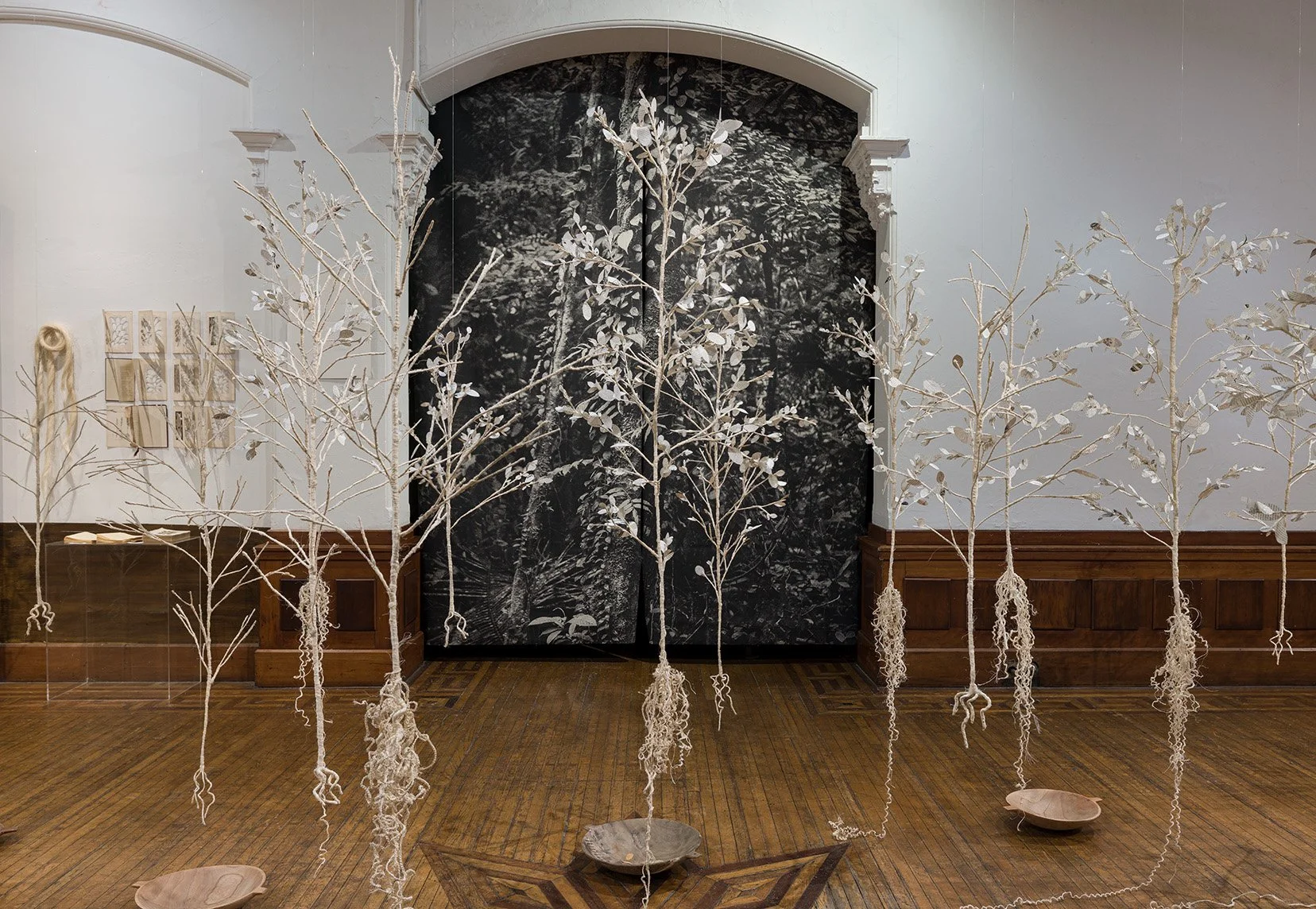
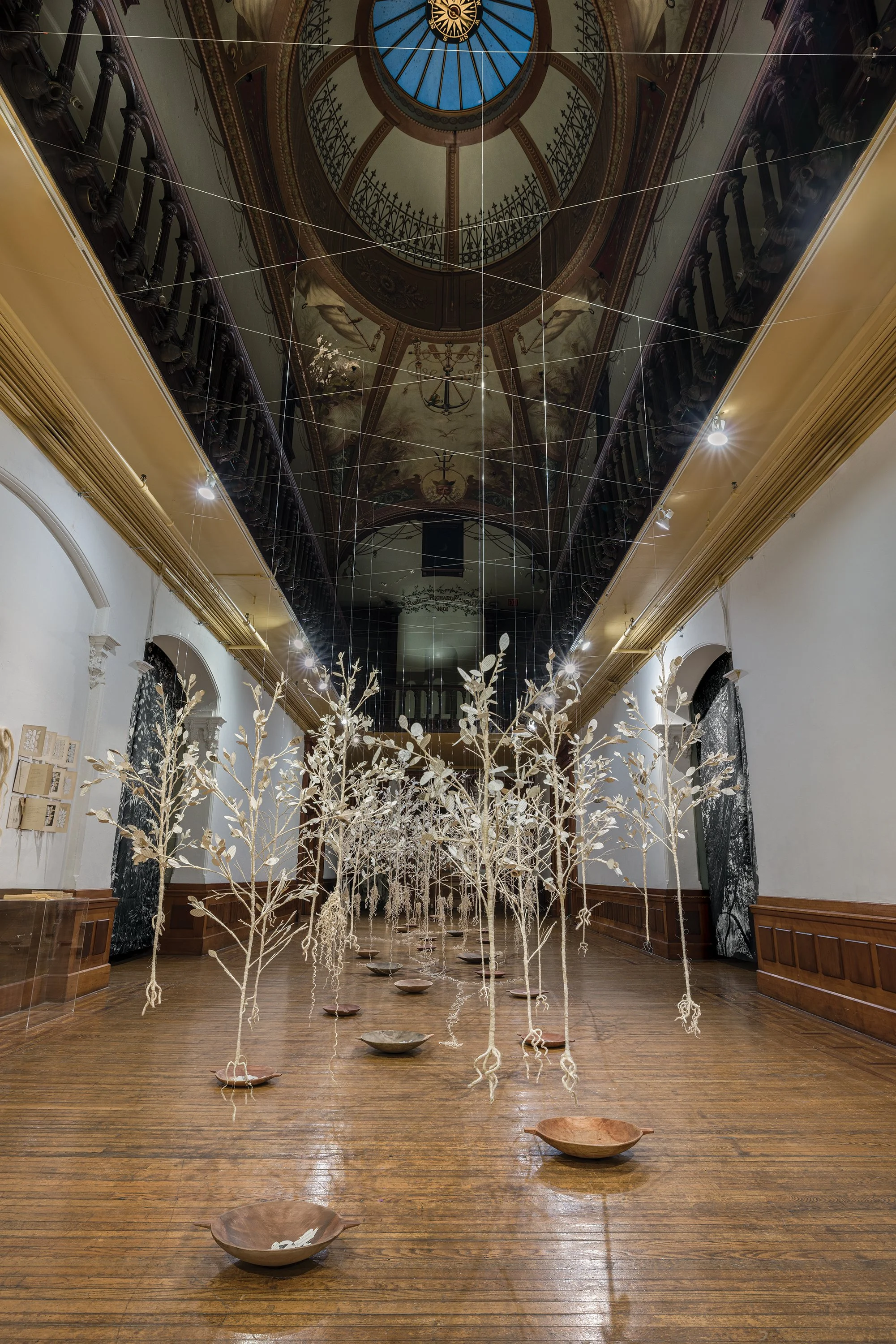
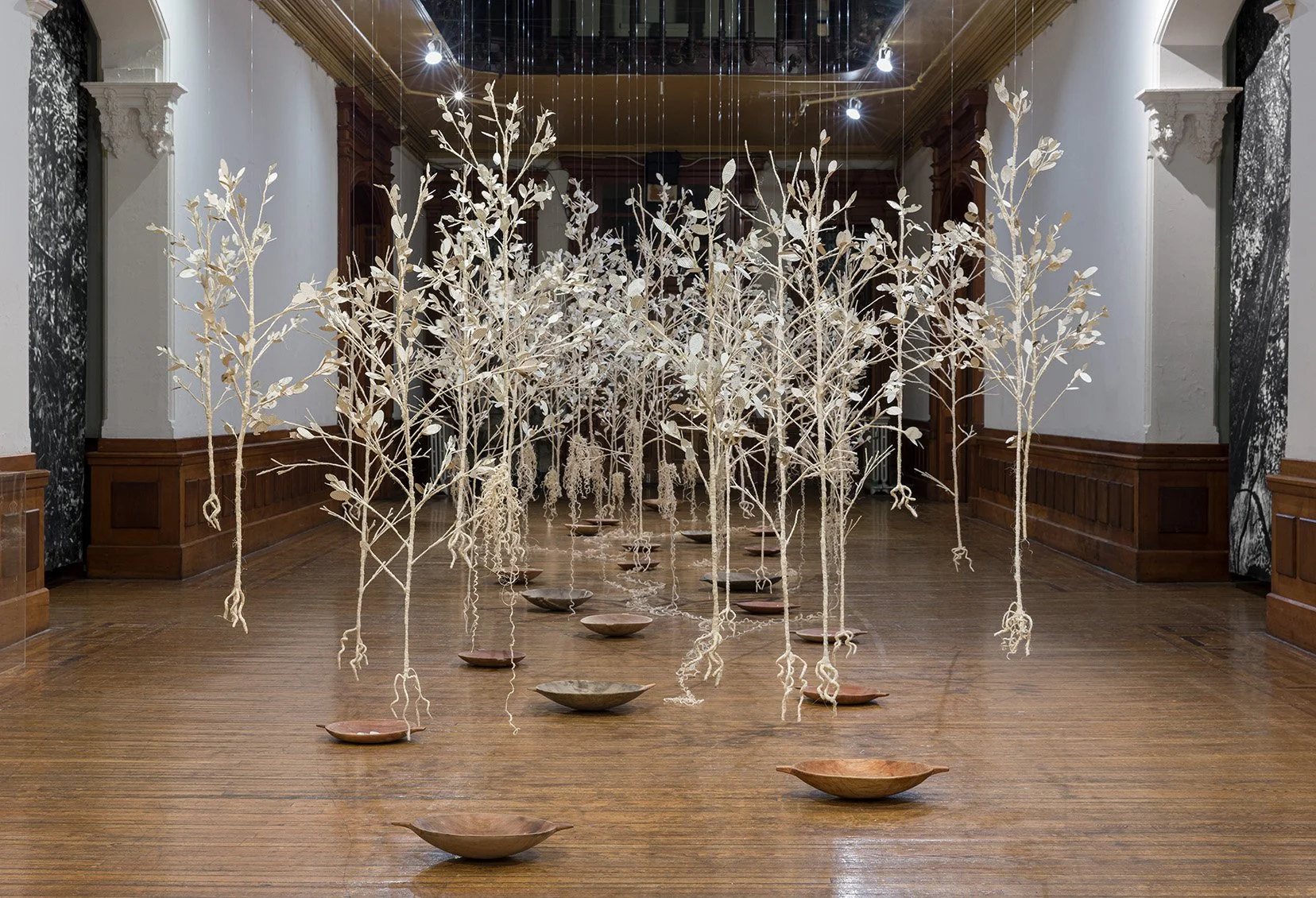
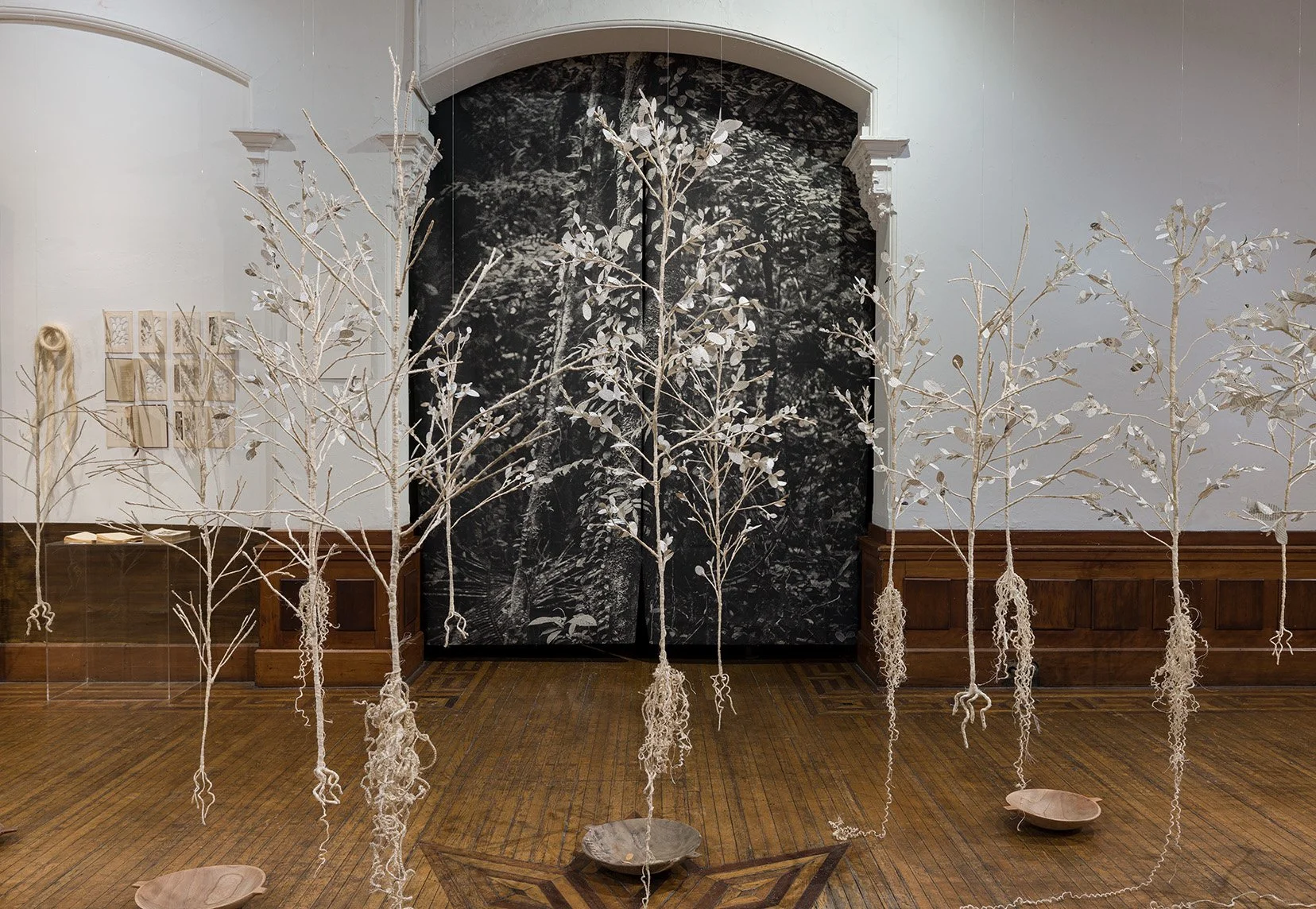
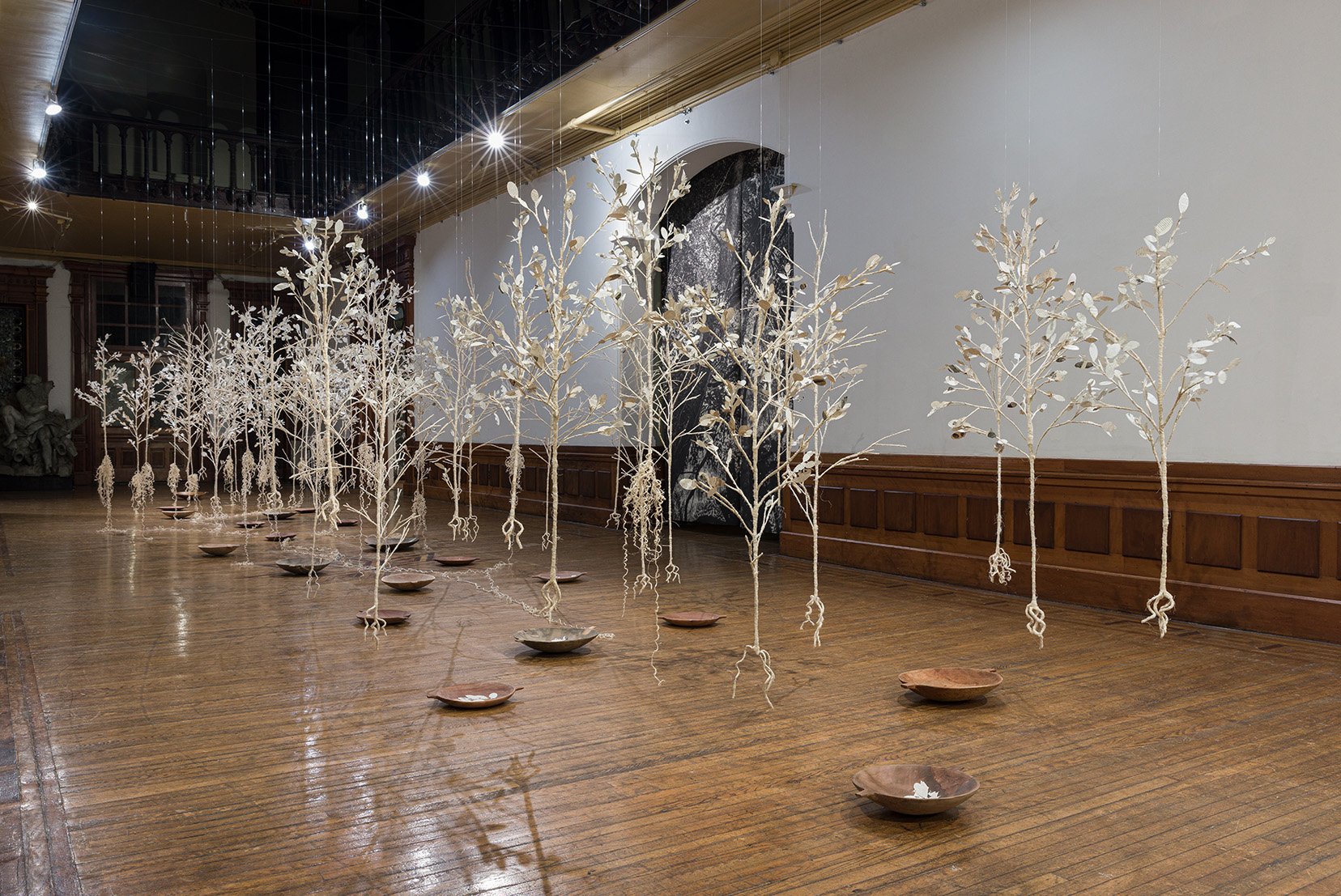
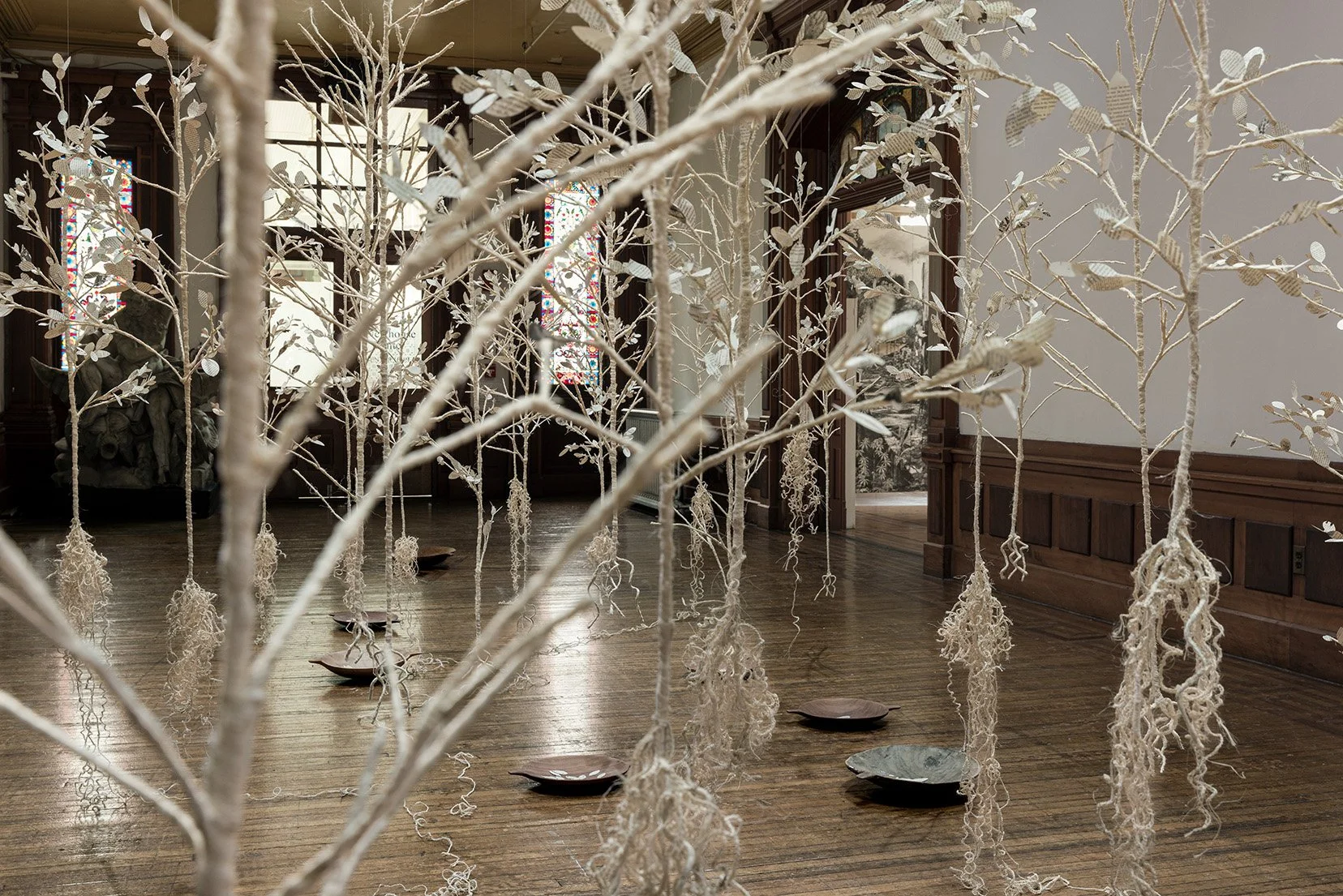
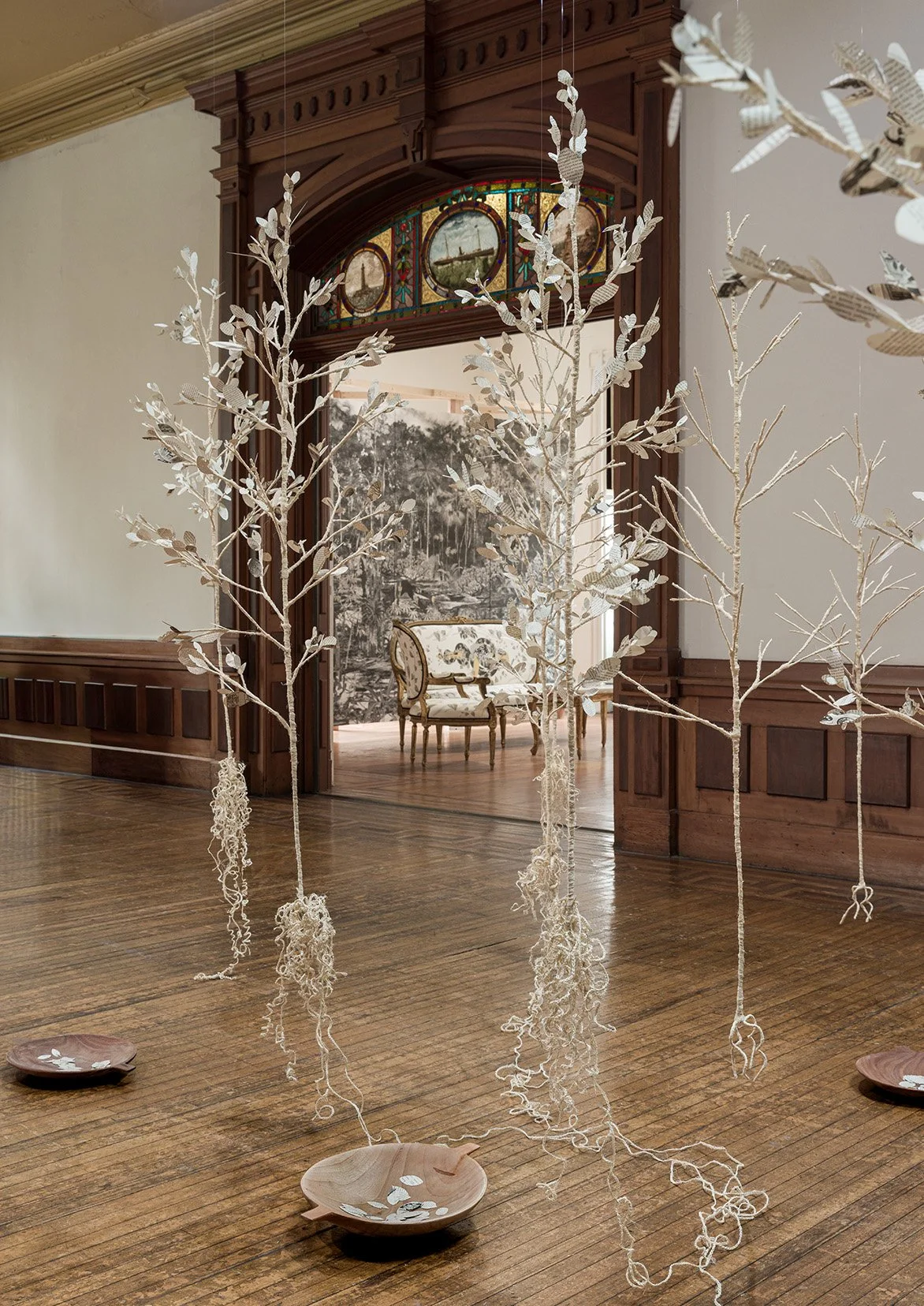
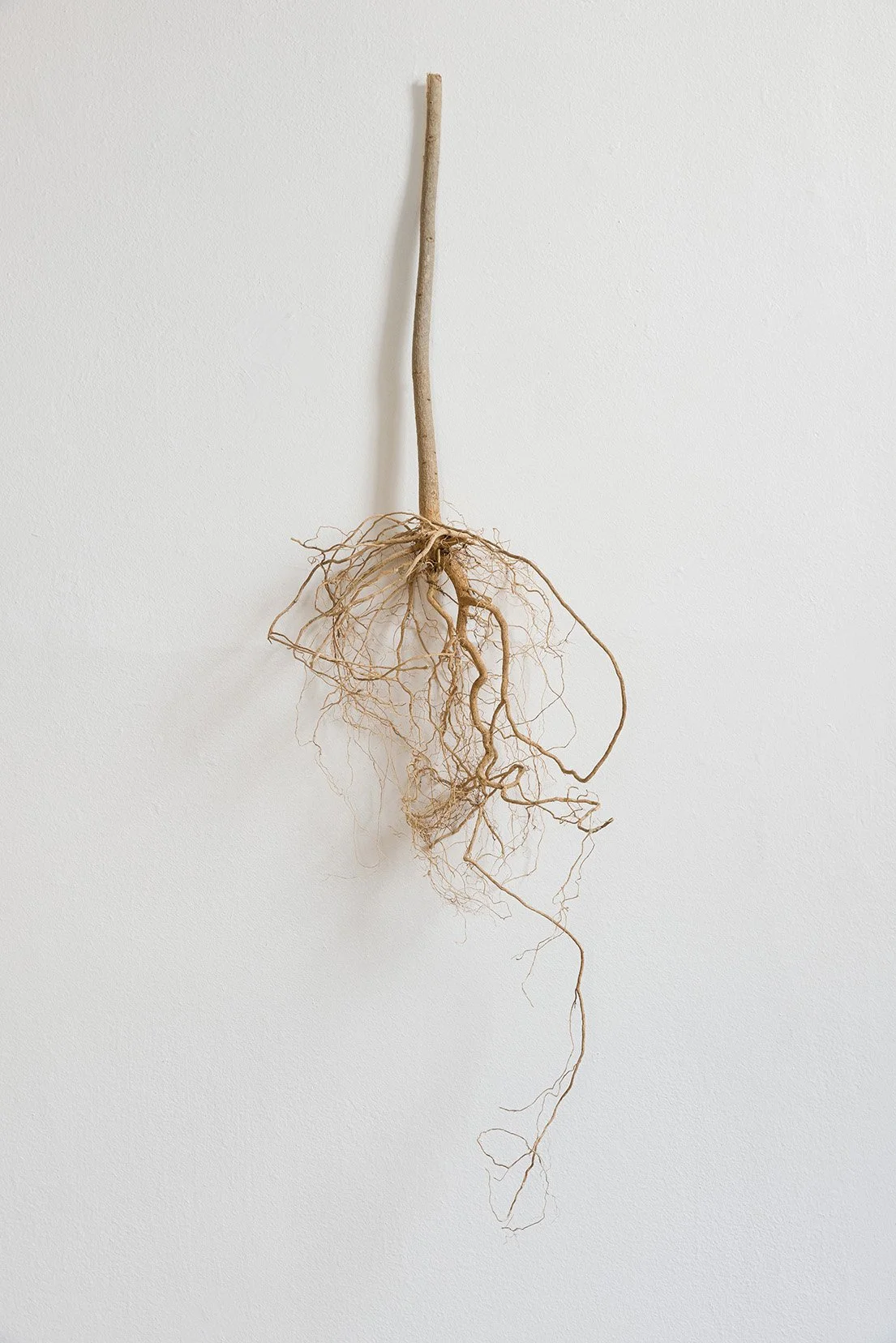
The site-specific installation Sueño con Jardines de Coca fills Snug Harbor’s rotunda with fifty suspended coca bushes, their roots exposed, trying, but not fully able to touch the ground. This hanging forest embodies Arocha’s uprooting as she is held between geographies. Below, wooden bateas—vessels once turned by women to separate gold from sand—rest on the floor as if gathering stories from these trees. They recall knowledge grounded in rhythm and care, but also bear the scars of exploitation, as gestures of sustenance are transformed into cycles of contamination and land destruction.
Across the exhibition, tension persists: between care and exploitation, belonging and rupture. Entrela Coca y el Oro invites us to reflect on how we live with plants, land, and each other; to listen to voices pushed aside; and to imagine futures nourished by care.
– Juliana Steiner
Sueño con jardines de Coca, 2025
Fique fiber, aluminum wire, wooden bateas, coca leaves, and paper from nineteenth-century book pages. 88 × 18 × 10 feet.
This work was created in collaboration with Fundación San Lorenzo de Barichara —Yadira Bueno, Margarita Suárez, y Gloria Inés Beltrán, Juli Viviana Silva Sánchez— who hand-crafted the structure of each coca bush using fique fiber and wire. The wooden bateas, traditionally used to separate gold from river sand, were made by José Félix Murillo, Choibá Chocó.
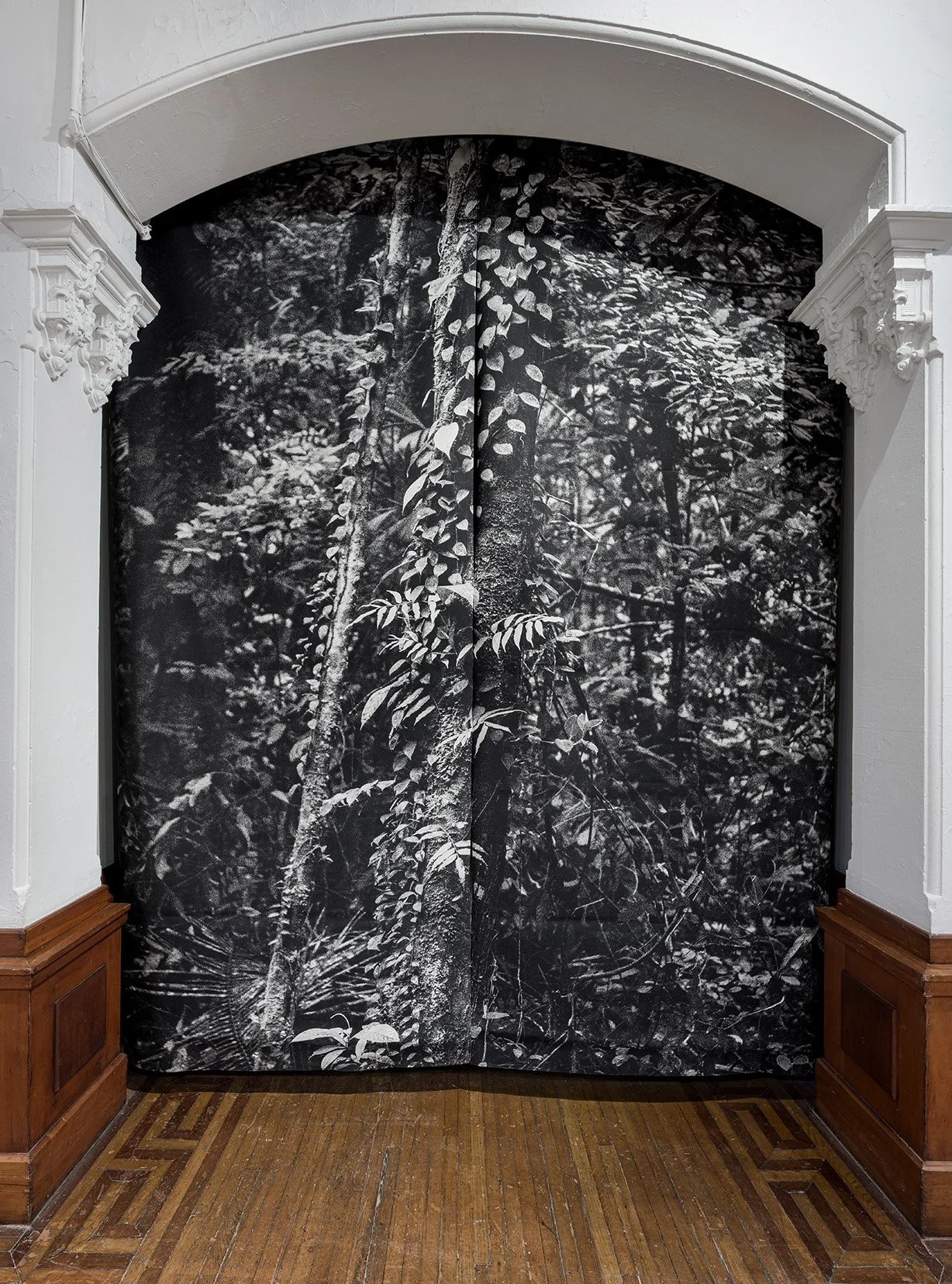
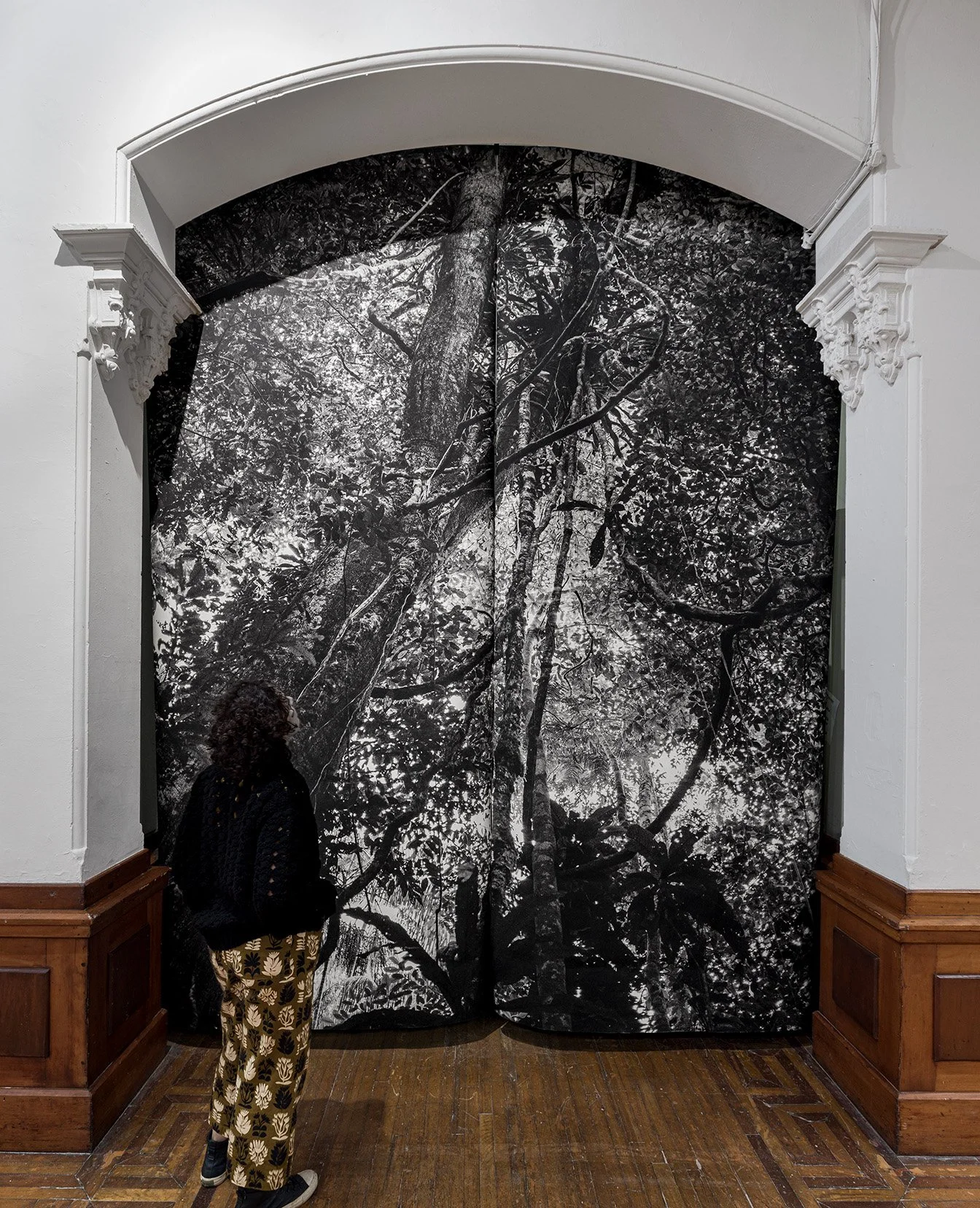
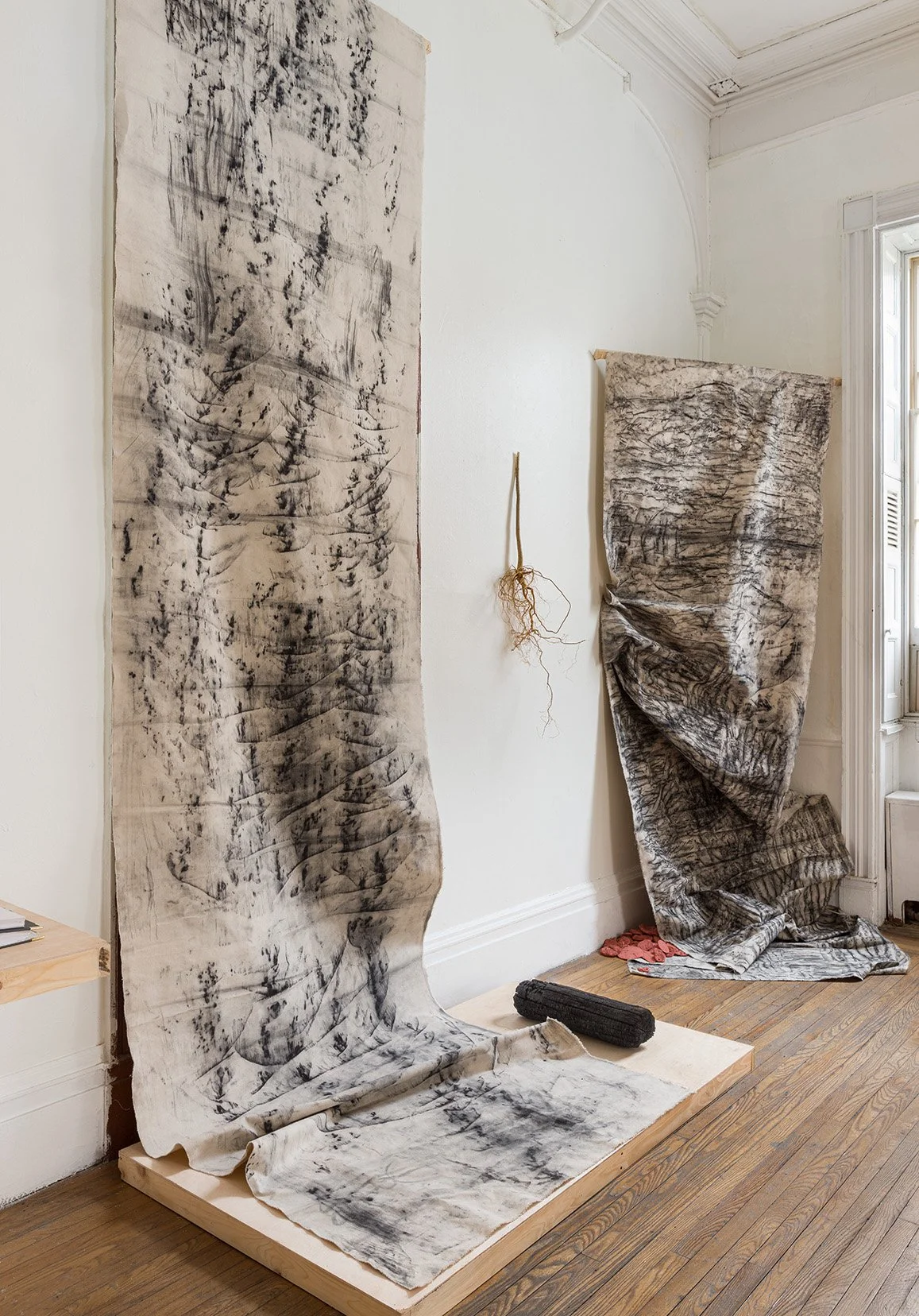
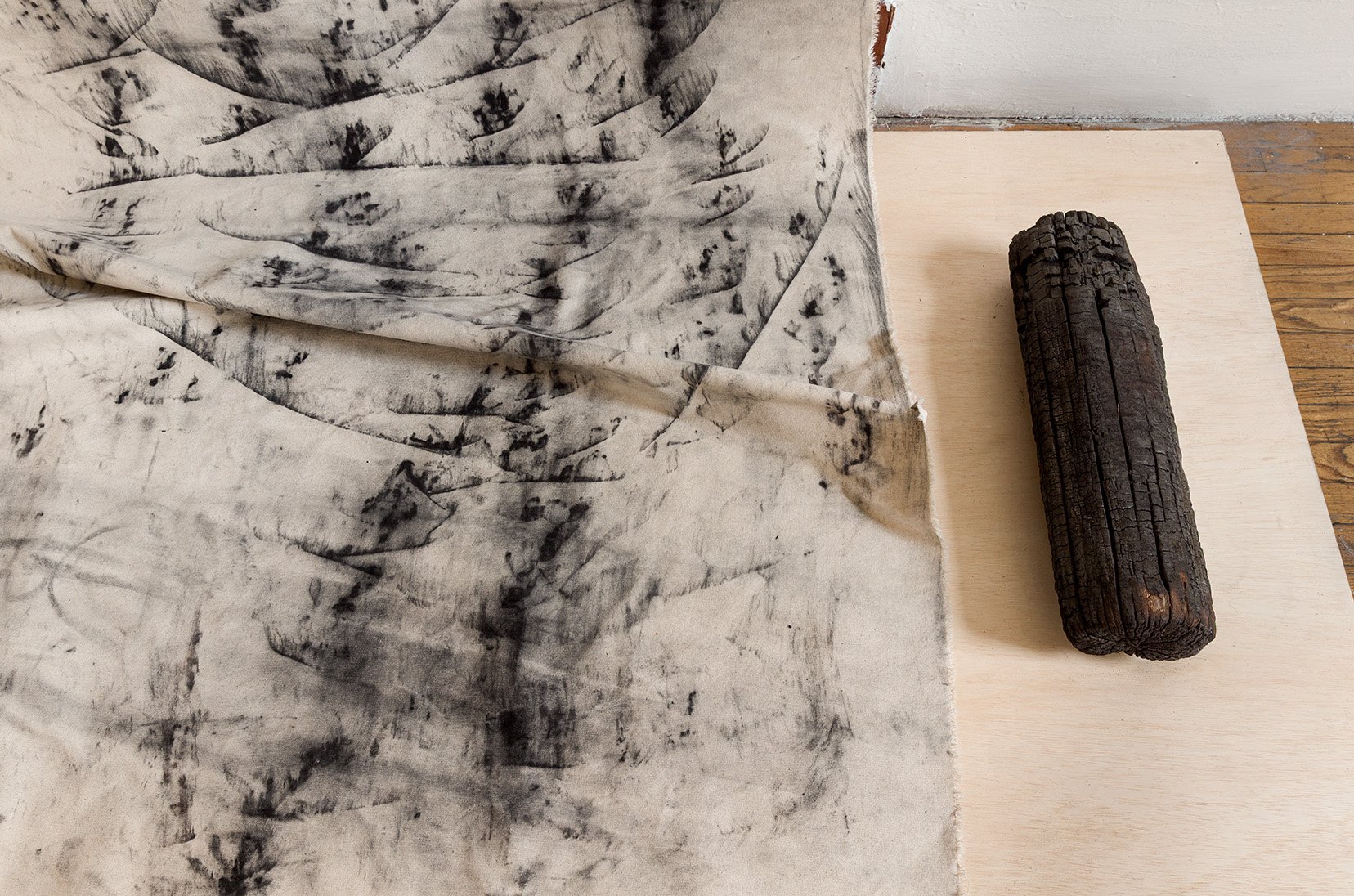
Solo siento paz al verte recorrer el tronco de este gran árbol, 2019
Leticia, Amazonas, Colombia, UV print on cotton canvas. 10 × 12 feet
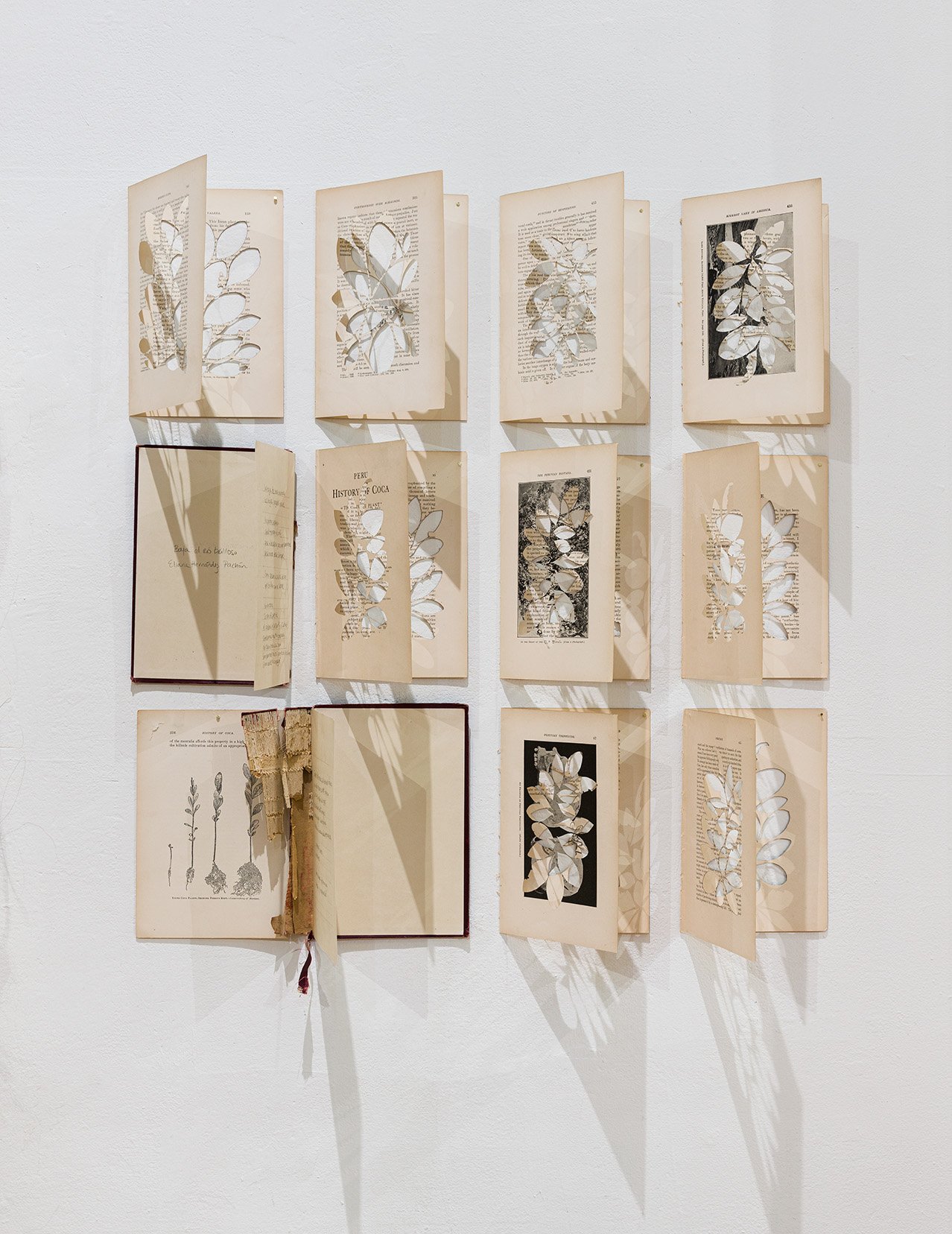
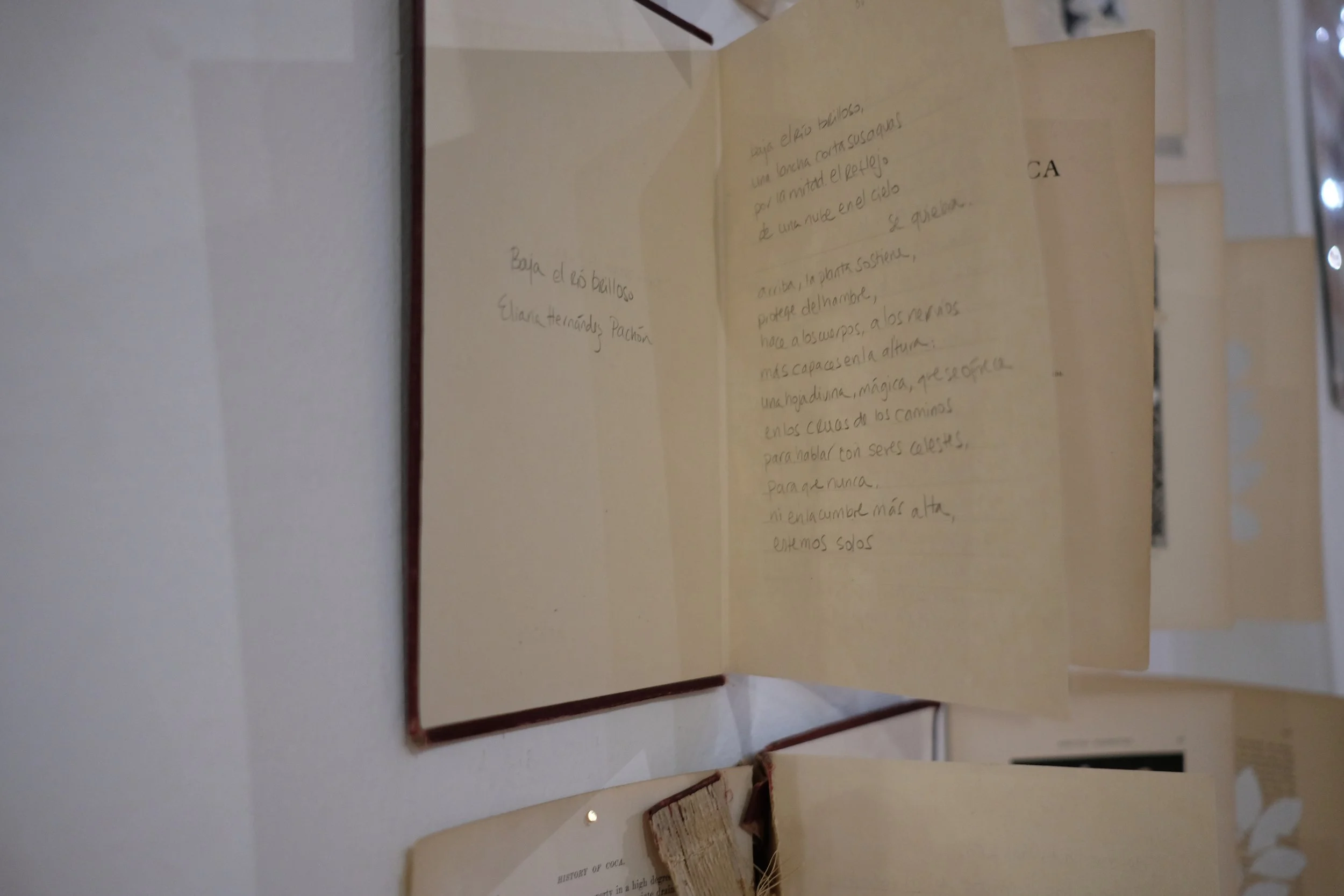
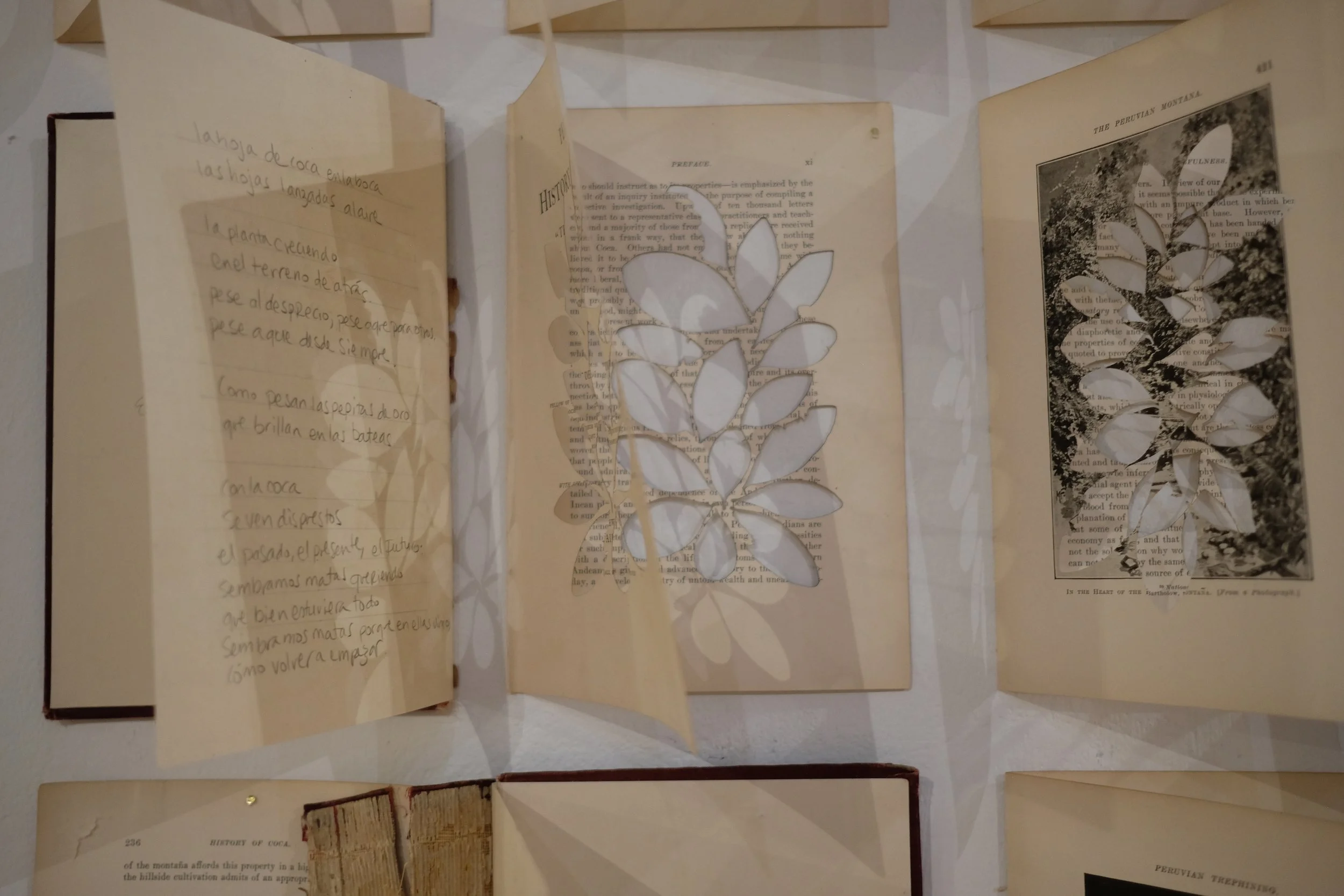
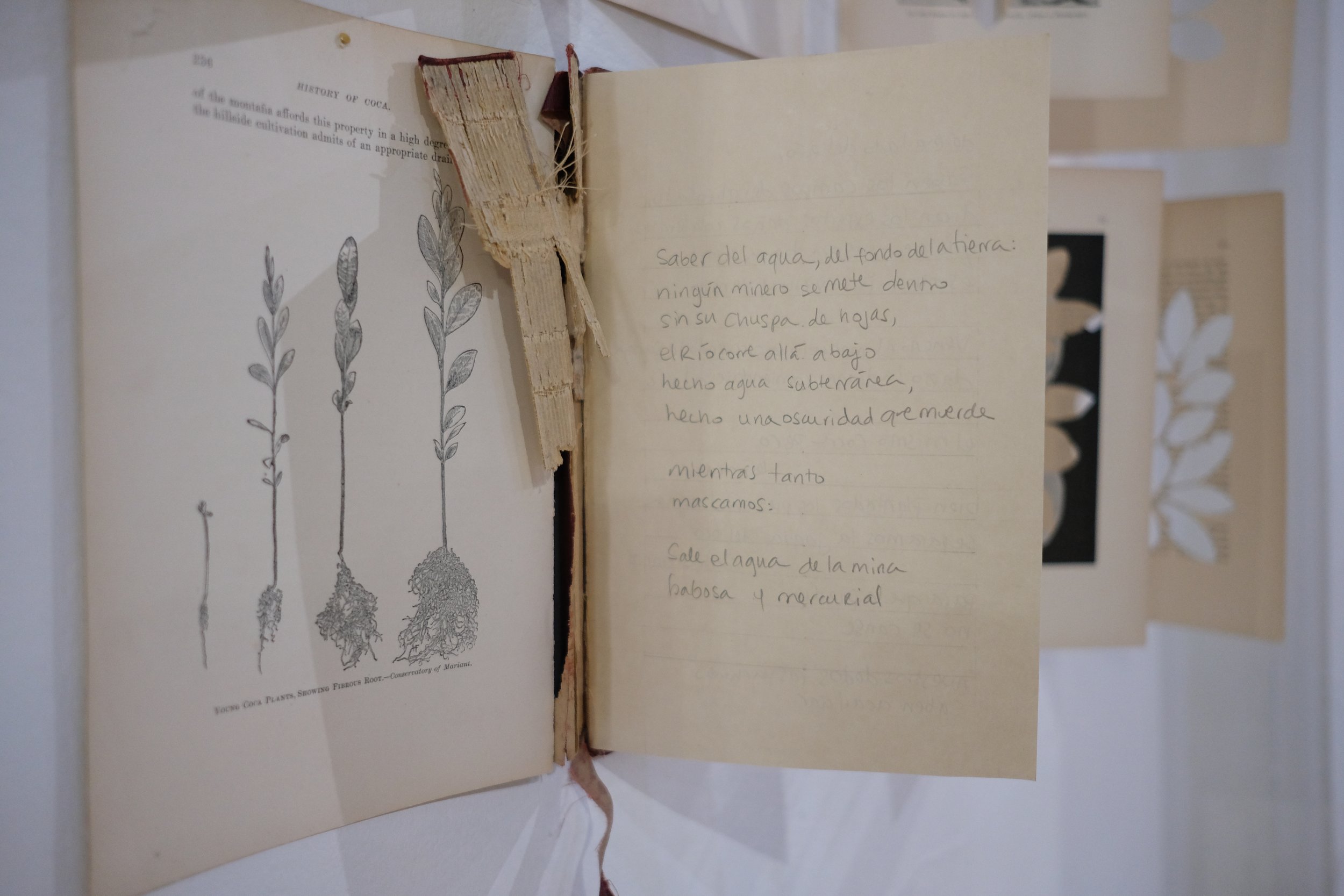
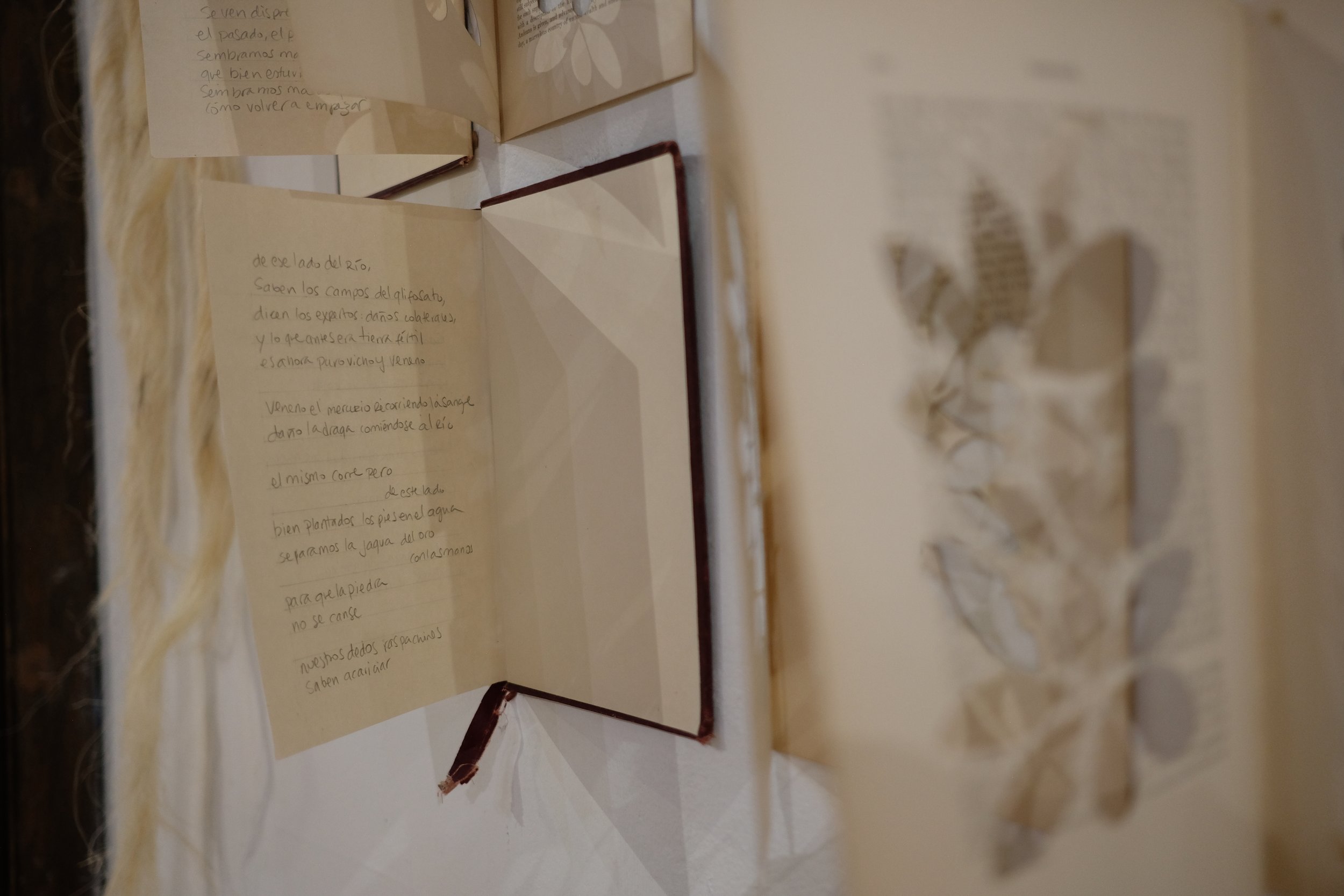
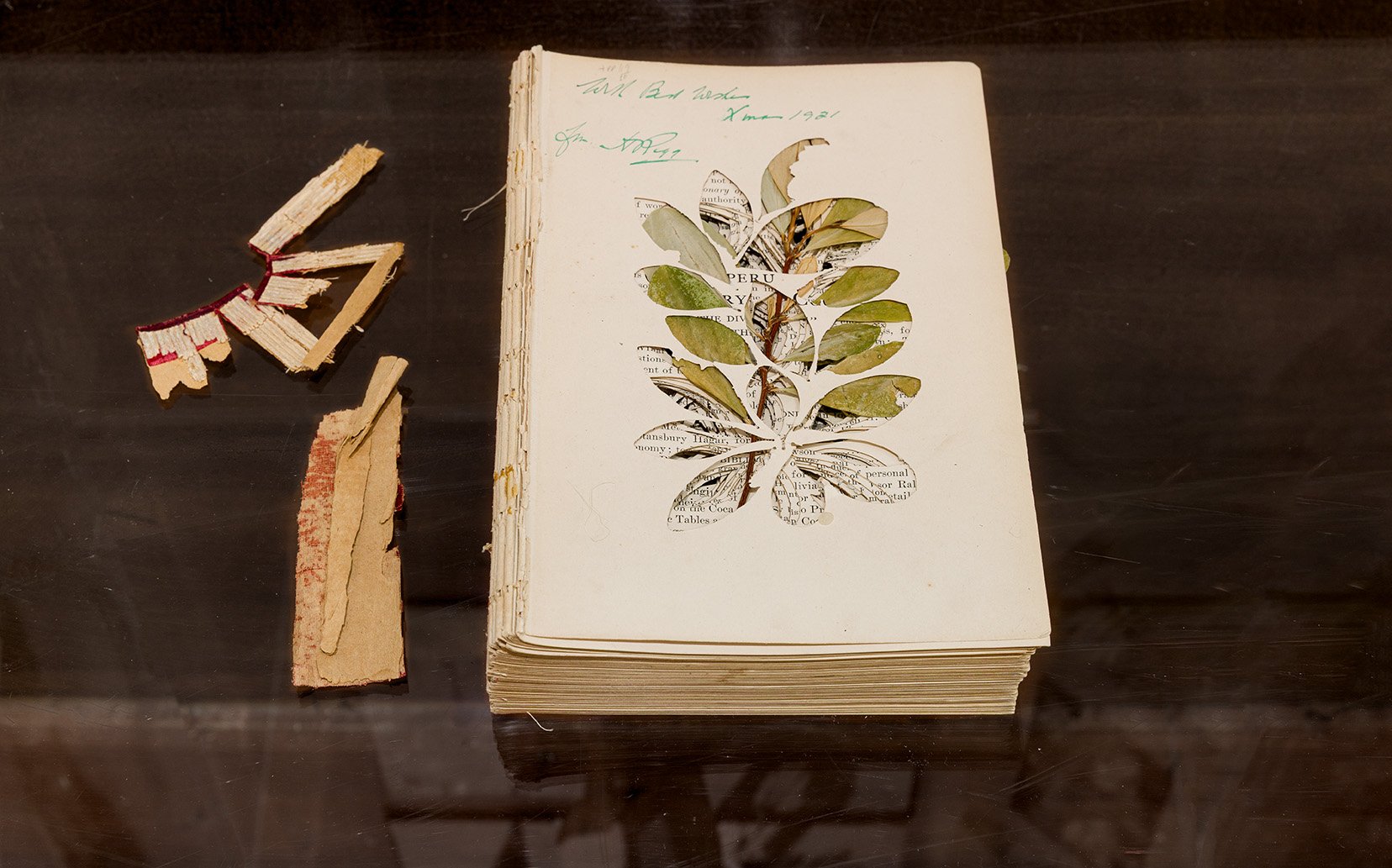
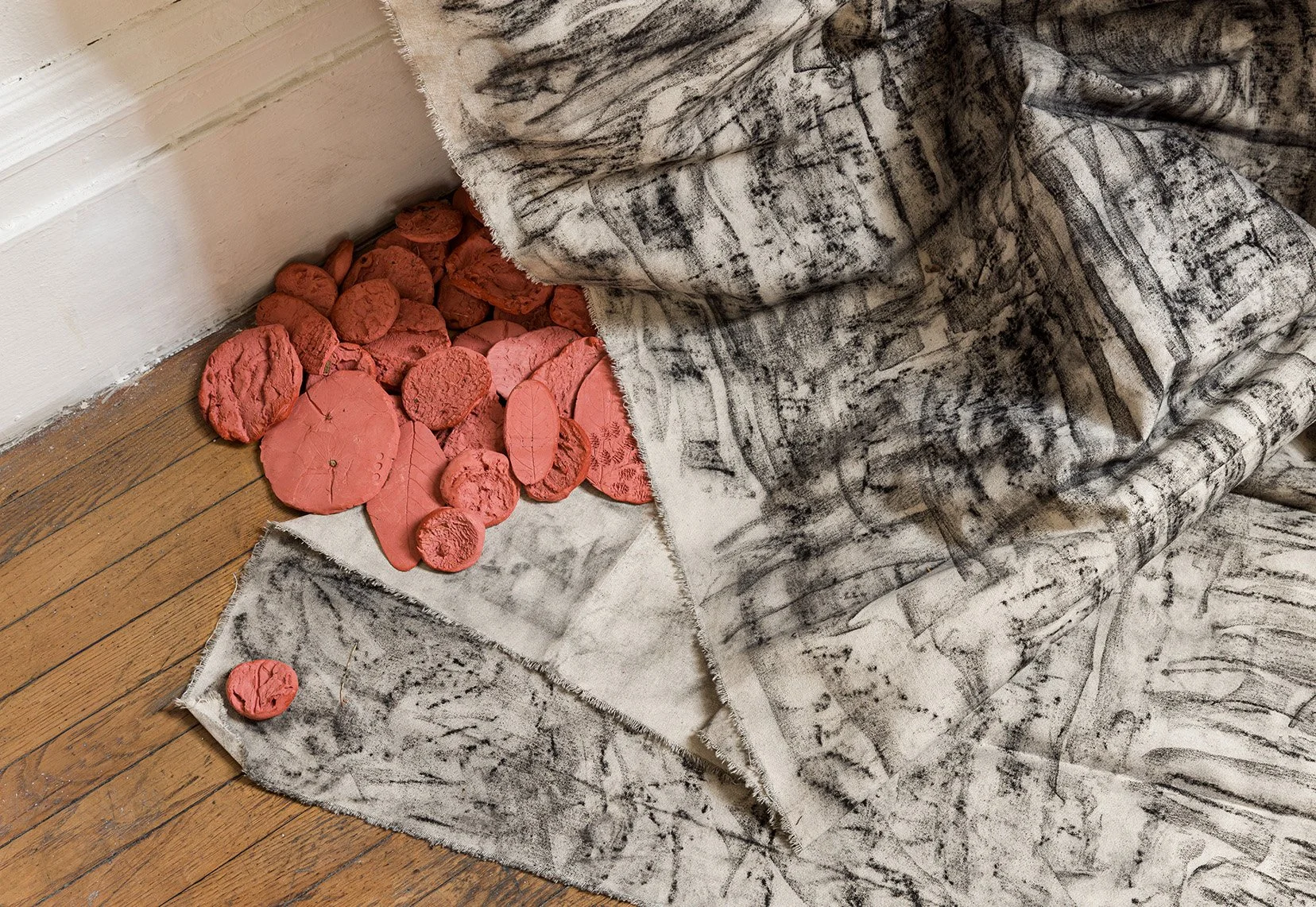
Huecos en la historia, 2025
Fique fiber, laser–cut pages from the first edition of History of Coca: “The Divine Plant” of the Incas byWilliam Mortimer, coca leaves.
baja el río brilloso
baja el río brilloso,
una lancha corta sus aguas
por la mitad. el reflejo
de una nube en el cielo
se quiebra.
arriba, la planta sostiene,
protege del hambre,
hace a los cuerpos, a los nervios
más capaces en la altura:
una hoja divina, mágica, que se ofrece
en los cruces de los caminos
para hablar con seres celestes,
para que nunca,
ni en la cumbre más alta,
estemos solos
la hoja de coca en la boca
las hojas lanzadas al aire
la planta creciendo
en el terreno de atrás.
pese al desprecio, pese a que para otros,
pese a que desde siempre.
siguen el círculo del agua
caen por su propio peso
las pepitas de oro
que ahora brillan en la batea.
con la coca se ven dispuestos
el pasado, el presente, el futuro:
sembramos matas queriendo
que bien estuviera todo
sembramos matas porque en ellas vimos
cómo volver a empezar
saber del agua, del fondo de la tierra:
ningún minero se mete dentro
sin su chuspa de hojas,
el río corre allá abajo
hecho agua subterránea,
hecho una oscuridad que muerde
mientras tanto
mascamos:
sale el agua de la mina
babosa y mercurial
de ese lado del río,
saben los campos del glifosato.
dicen los expertos: daños colaterales,
y lo que antes era tierra fértil
es ahora puro bicho y veneno
veneno el mercurio recorriendo la sangre
daño la draga comiéndose al río
el mismo río corre pero
de este lado
bien plantados los pies en el agua
separamos la jagua del oro
con las manos
para que la piedra
no se canse
nuestros dedos raspachines
saben acariciar
– Eliana Hernández Pachón
Buscando el infinito, 2024
Amacayacu, Amazonas, Colombia, UV print on cotton canvas. 10 × 12 feet
Sabio Yarumo, Dulce Coca, Tabaco Frío y Yuca Brava, 2024
Single channel video with audio, TRT 4:00
Belleza Inminente, 2025
La chagra de Amoka, 2019
Pigment print on cotton canvas, hand-painted with acrylic paint.
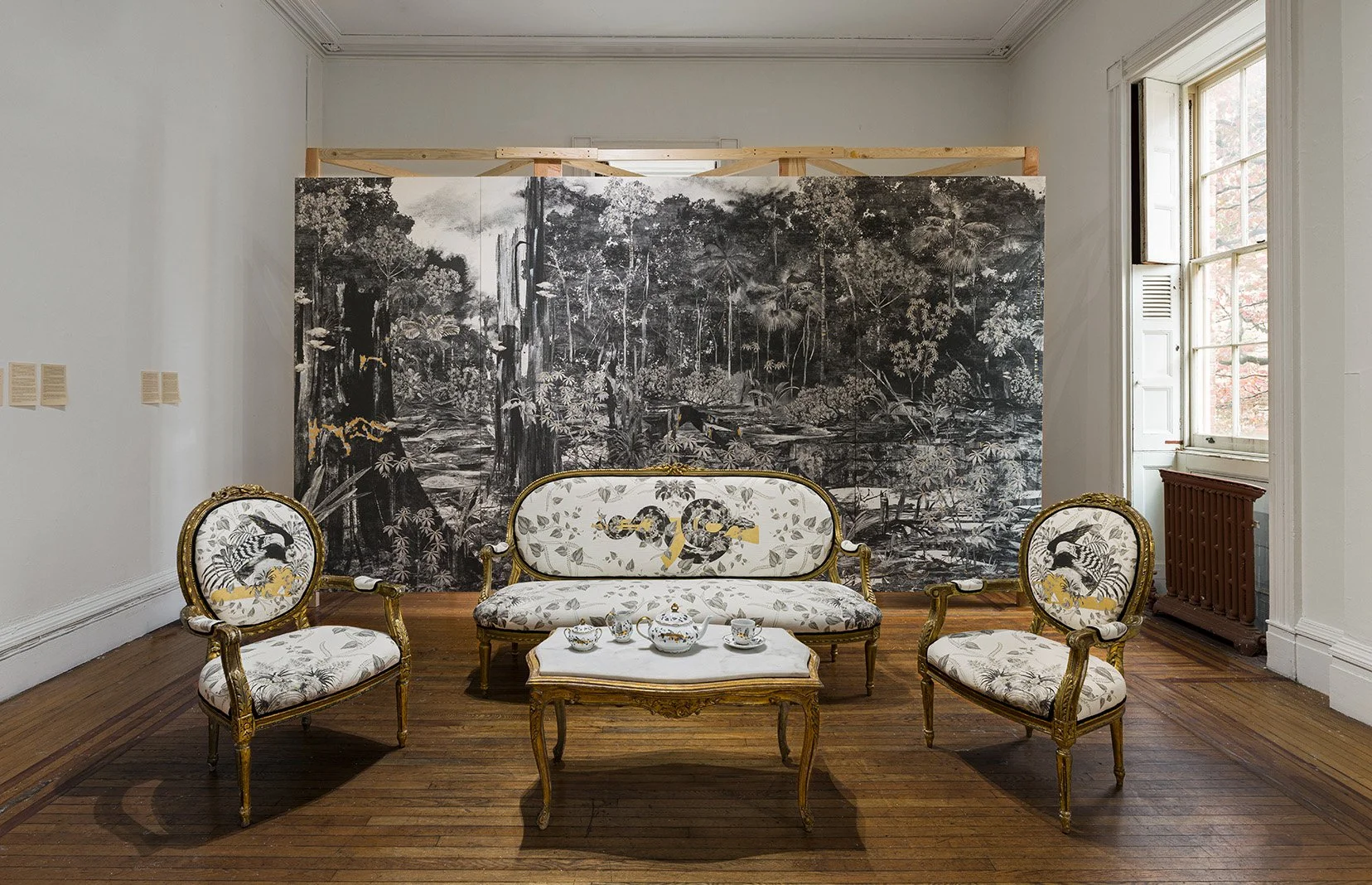
Anaconda celestial & Eagle’s Prey, 2017
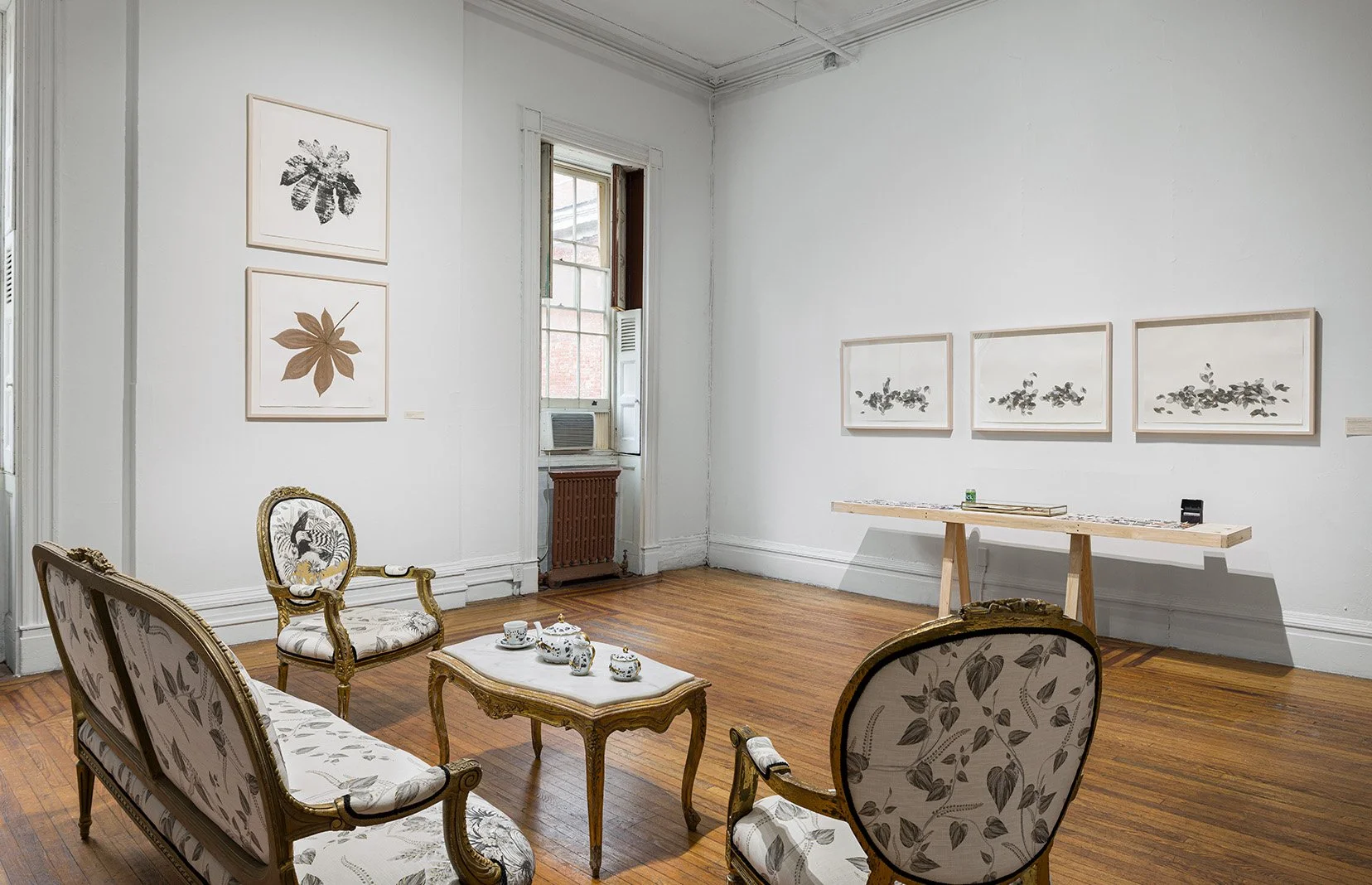
Vintage Settee and armchairs (1940s), upholstered with a cotton fabric, hand-painted with acrylic paint.
Los Insectos Centinelas, 2017
Hand-decorated porcelain with decals and gold luster.
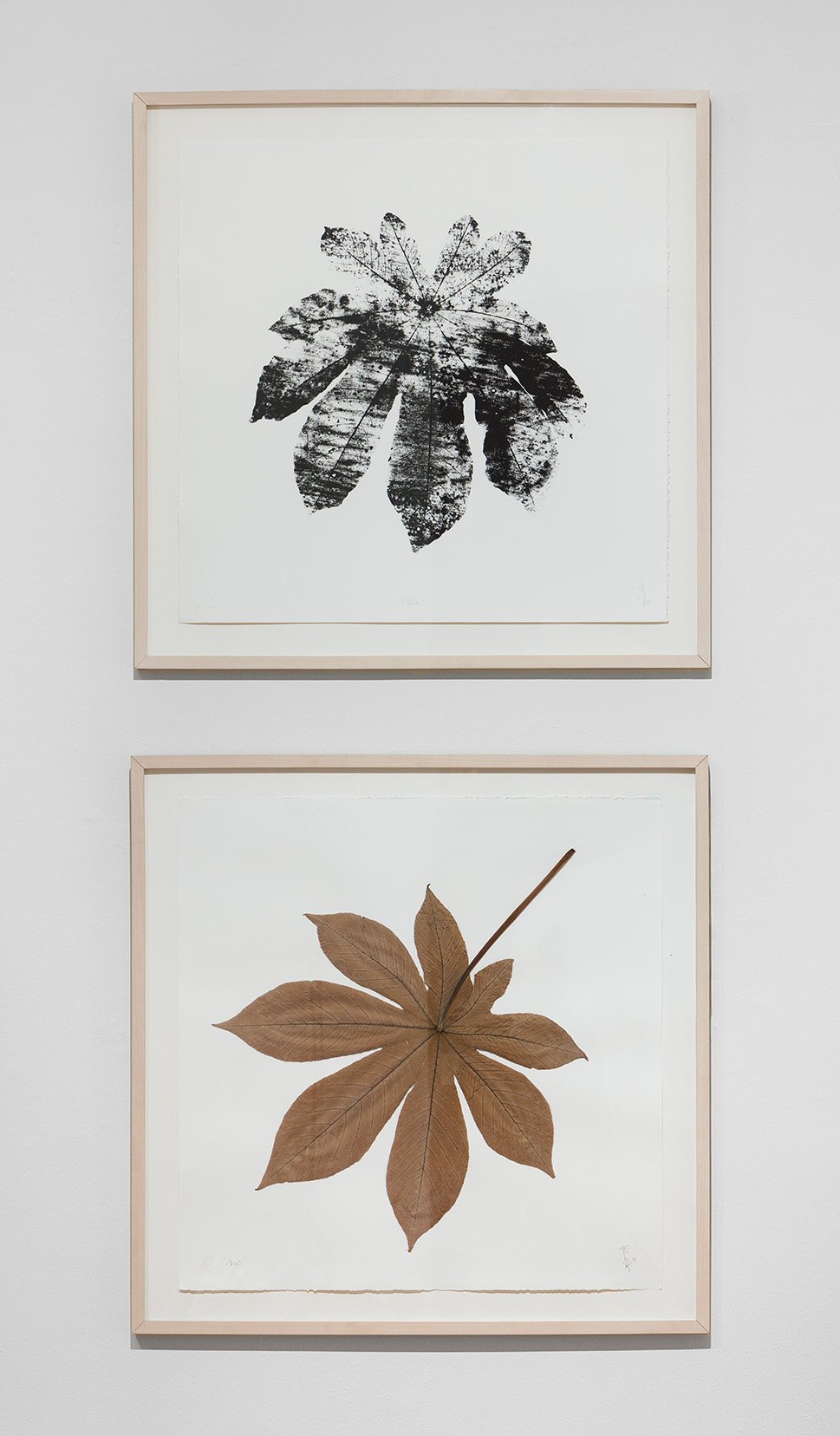
Alba, 2019
Silkscreen and pressed plant. 28 x 28 inches.
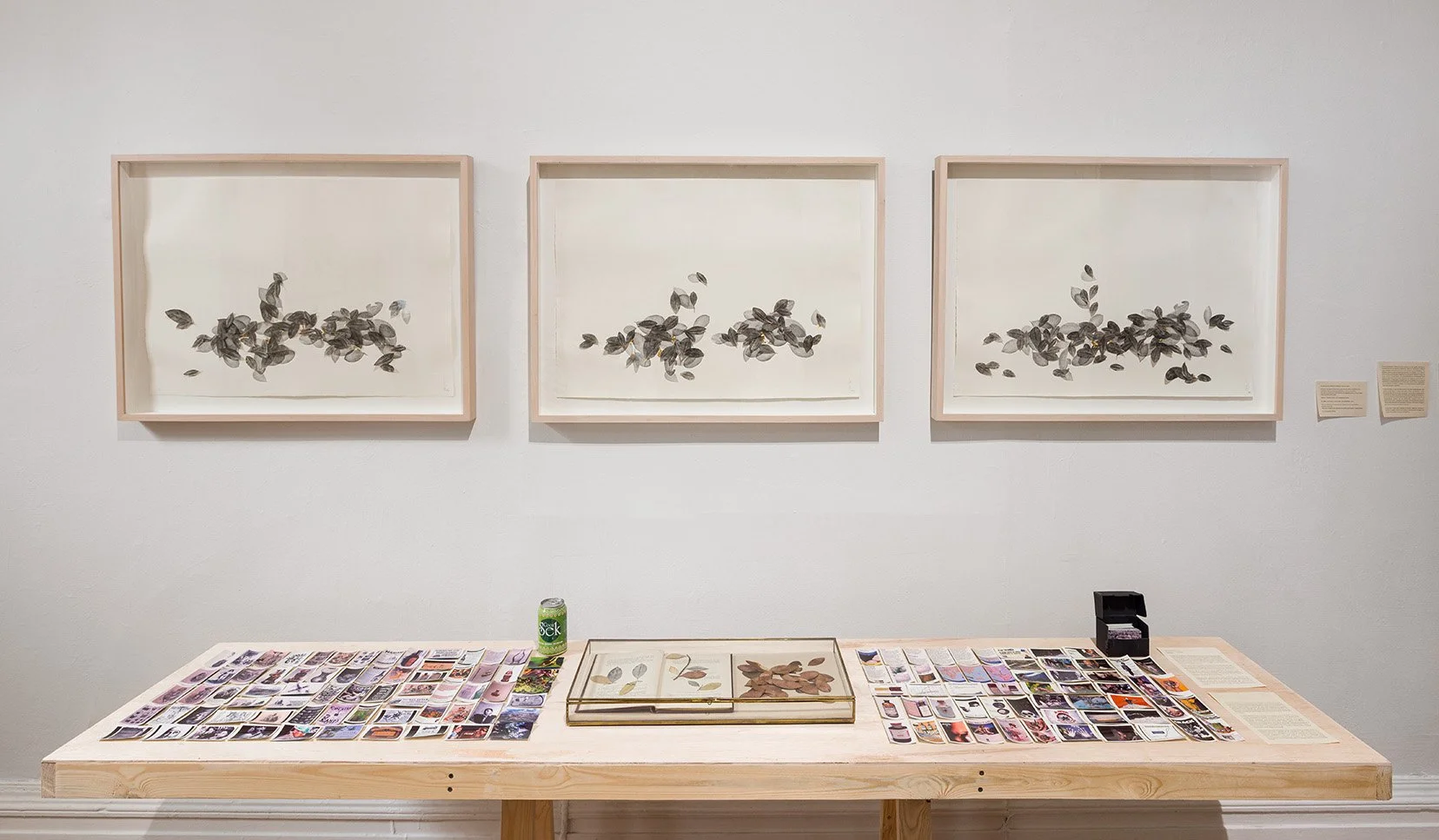
Hojas en movimiento sobre el fuego
Soft ground etching on Hahnemühle and pigment print on Kozo paper, hand-painted with acrylic.
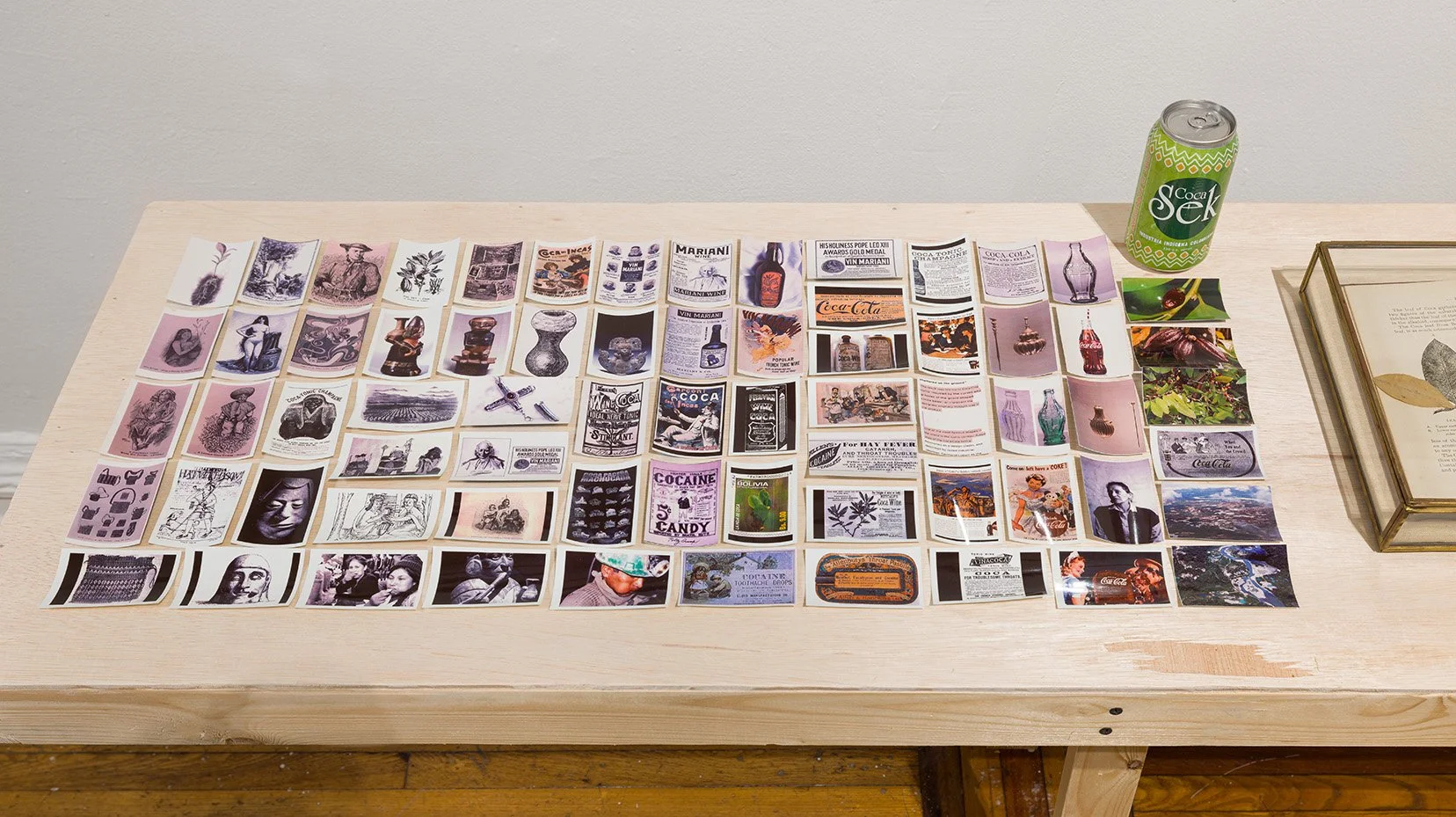
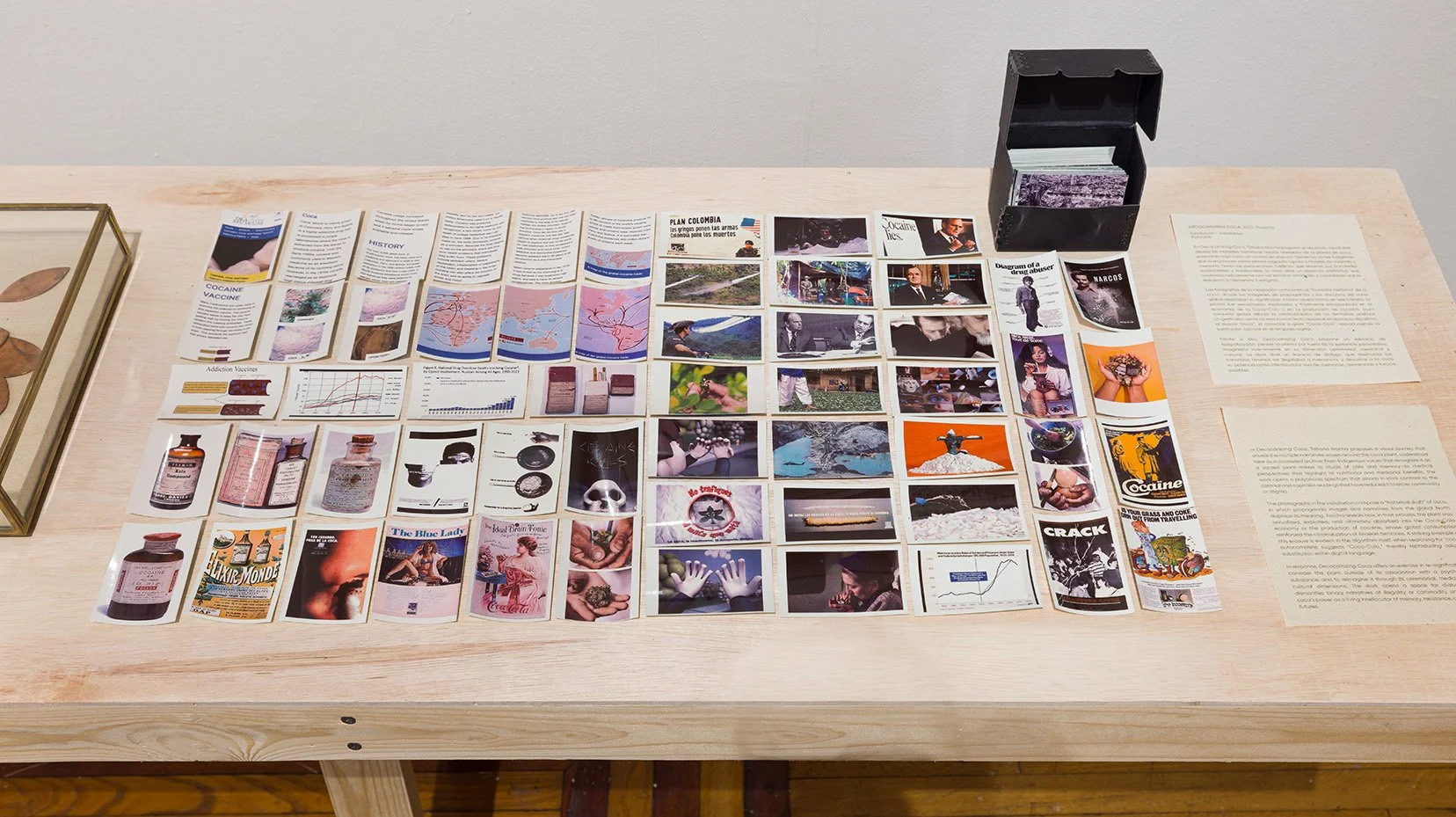
Decocainizing Coca, 2023–Present
Archival images on Polaroids
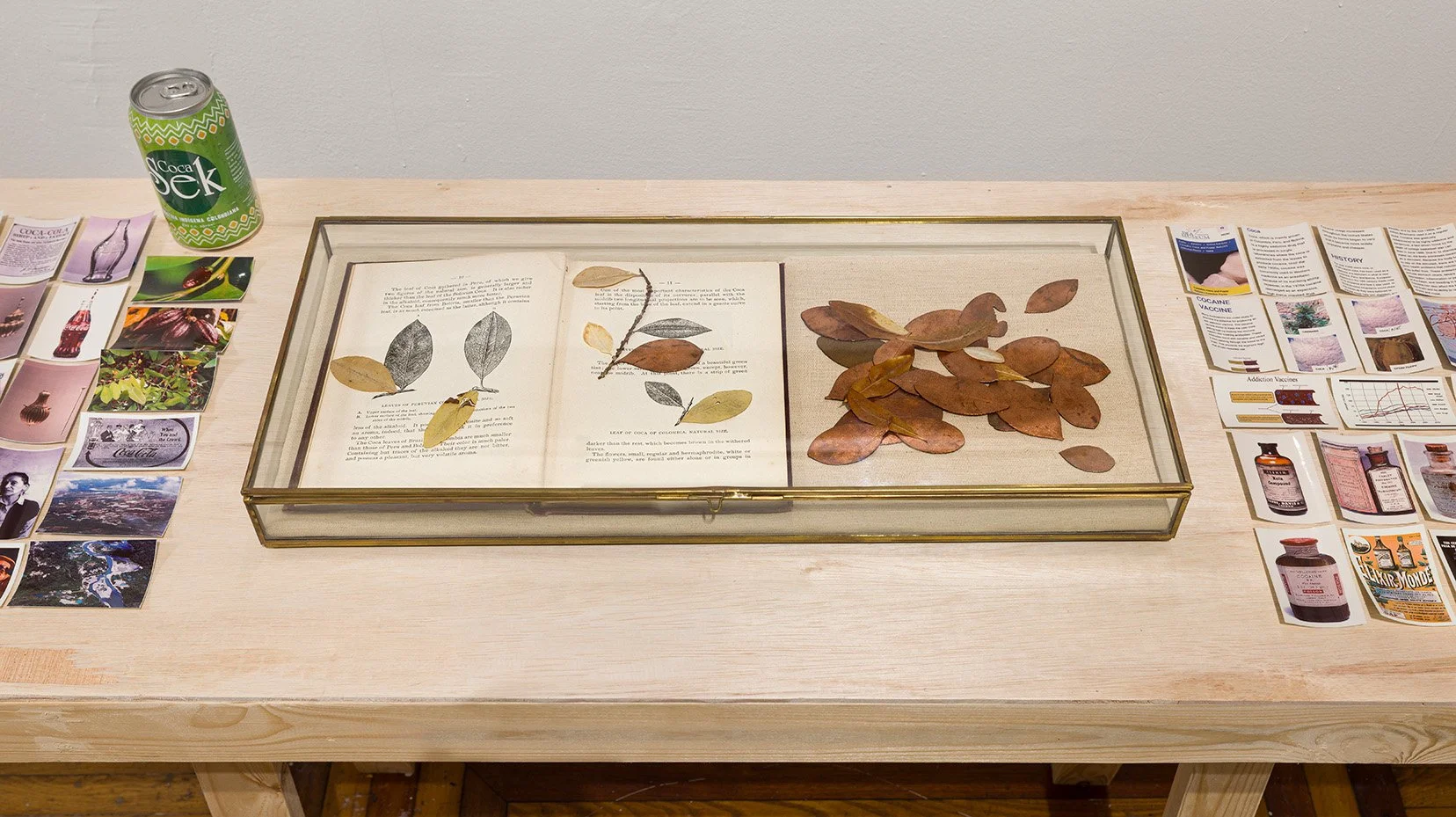
El libro, la planta, las hojas, una memoria, 2023
Glass box, vintage book, pressed coca leaves, copper plates.
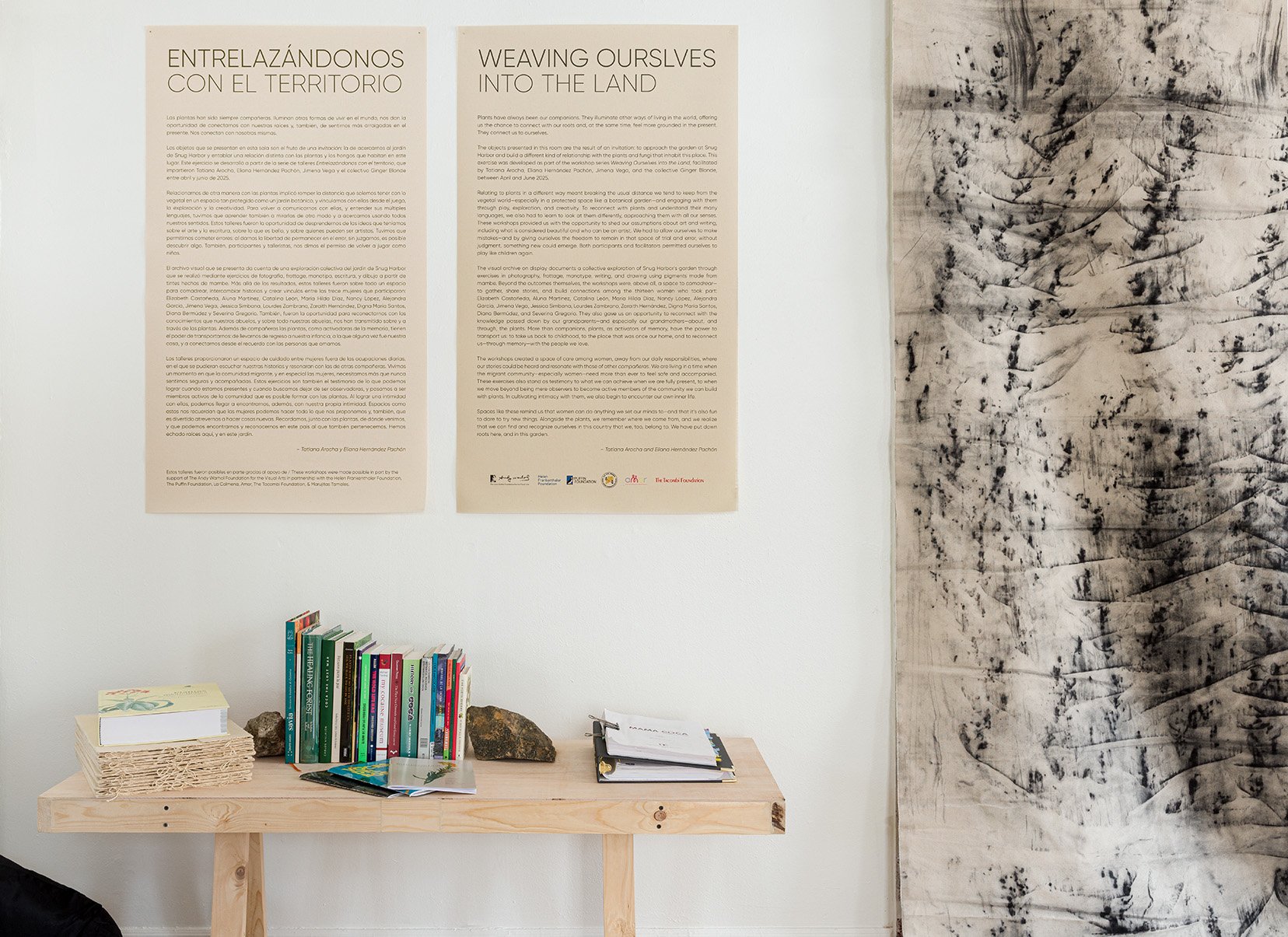
Plants have always been our companions. They illuminate other ways of living in the world, offering us the chance to connect with our roots and, at the same time, feel more grounded in the present. They connect us to ourselves.
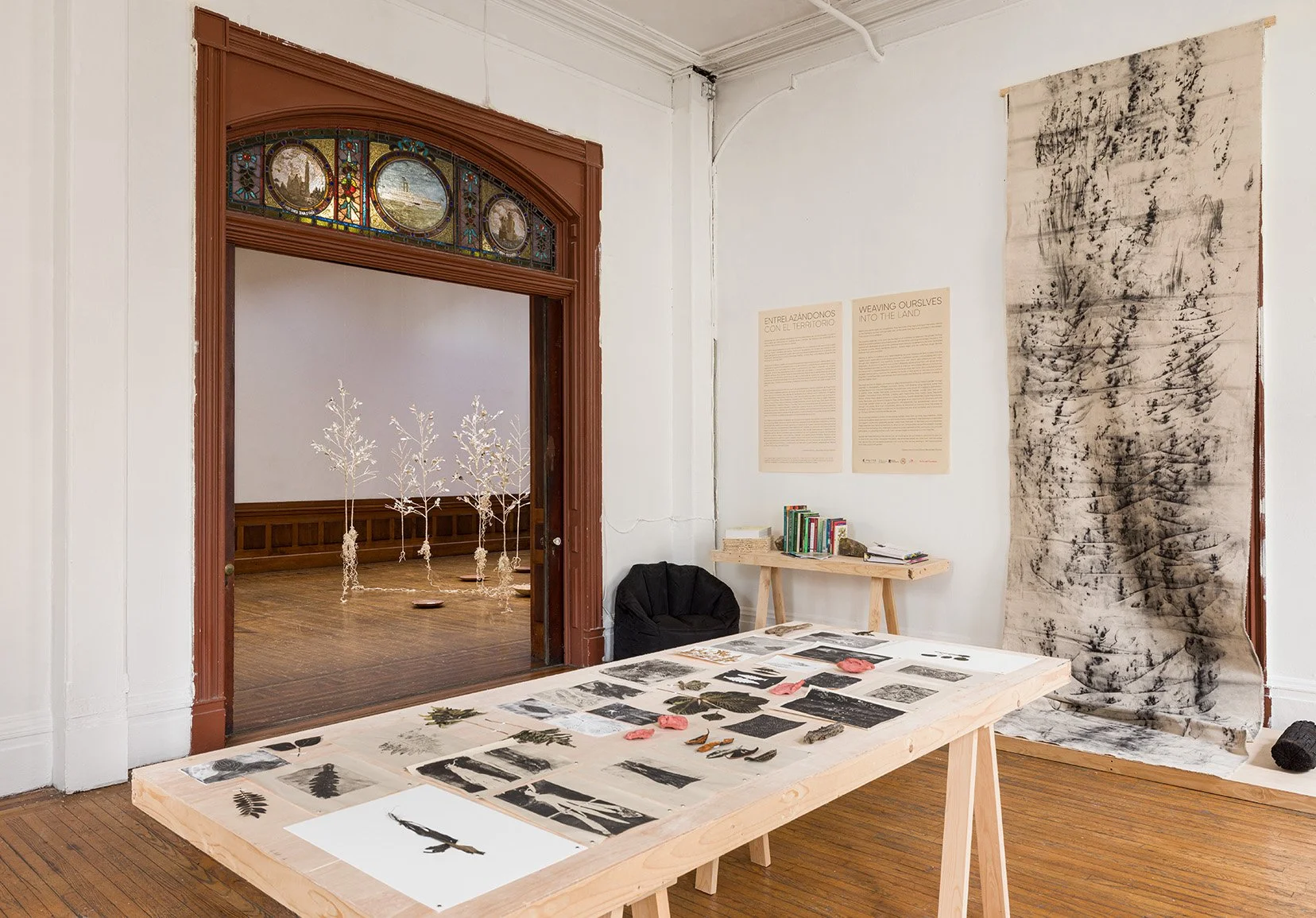
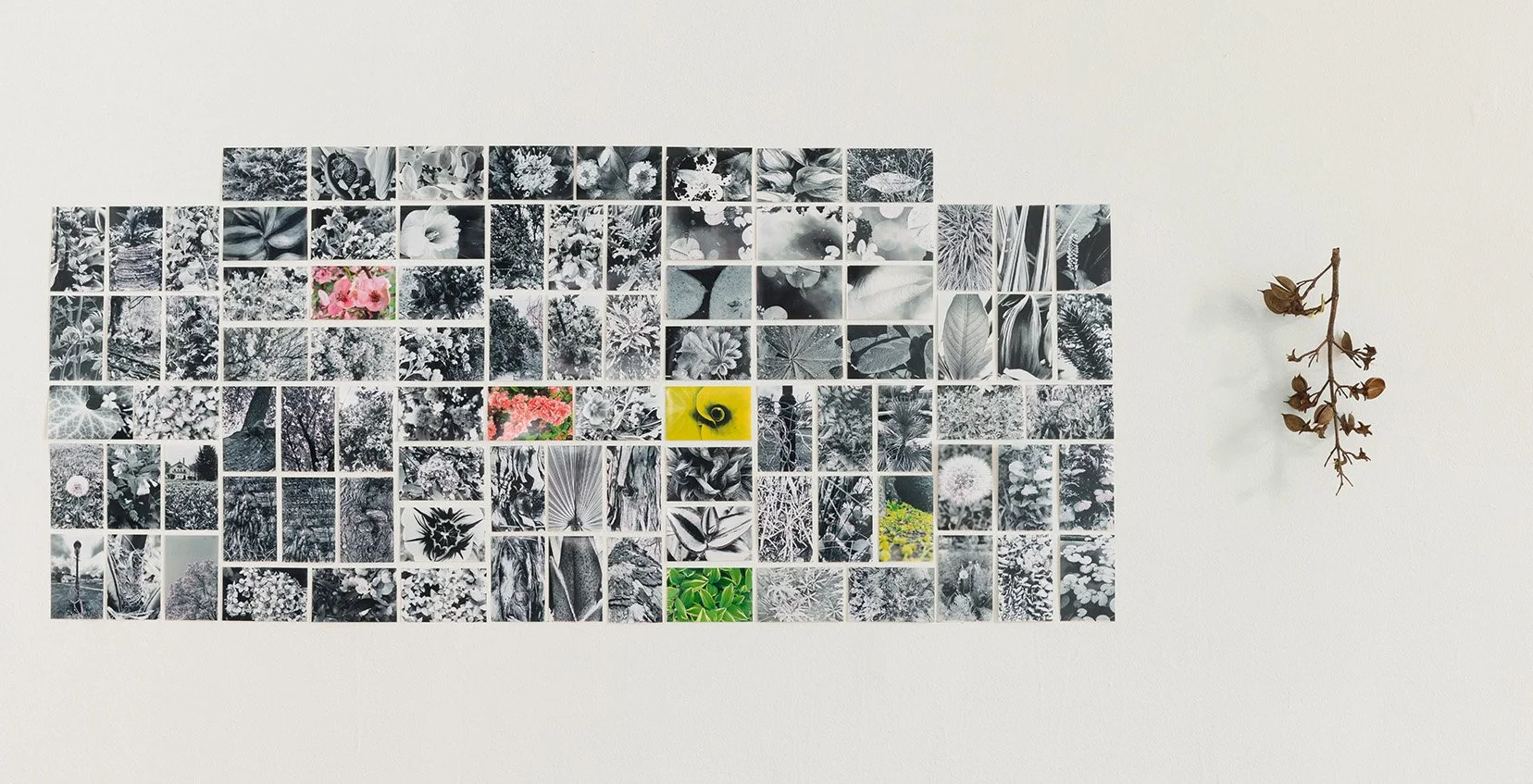
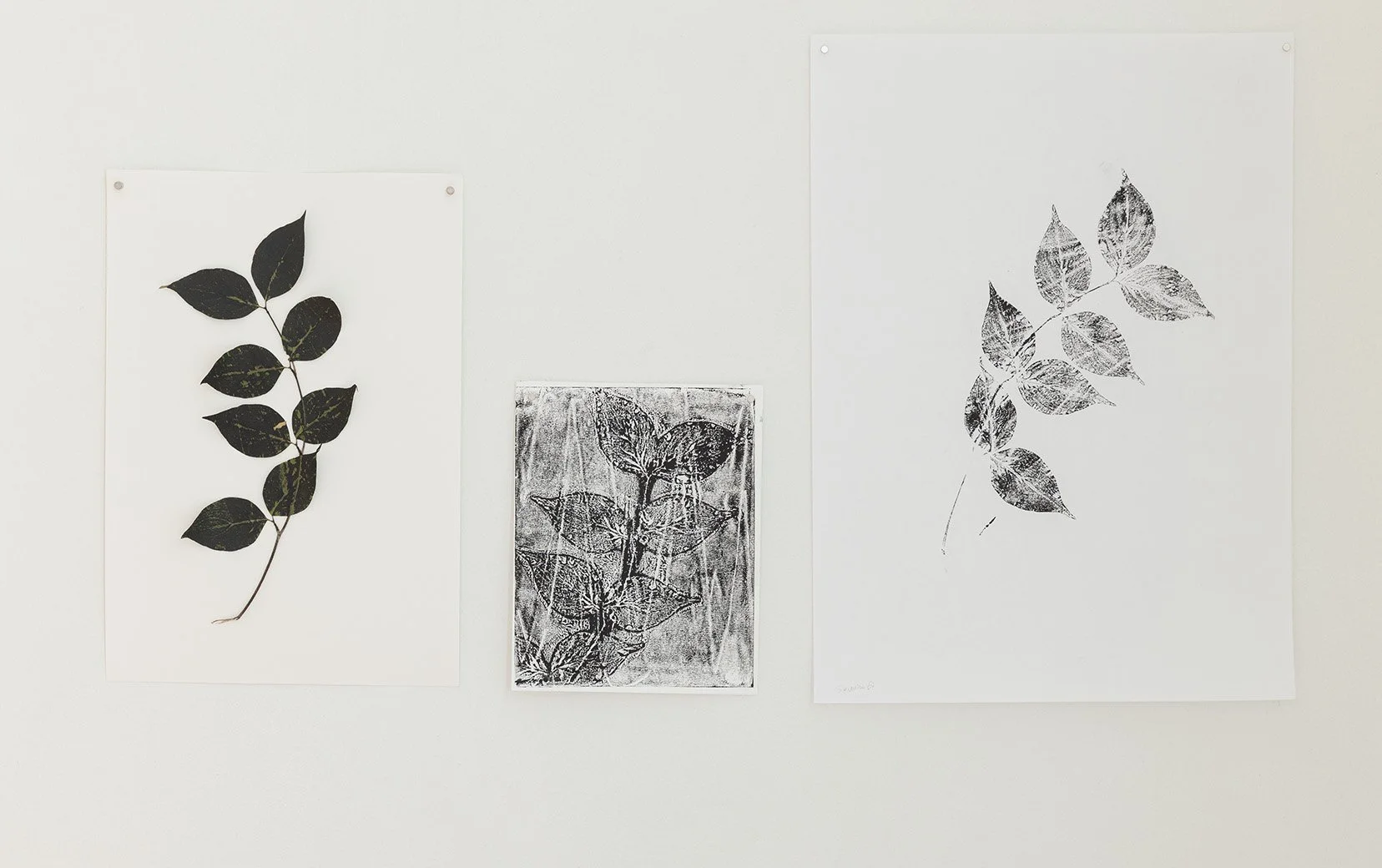
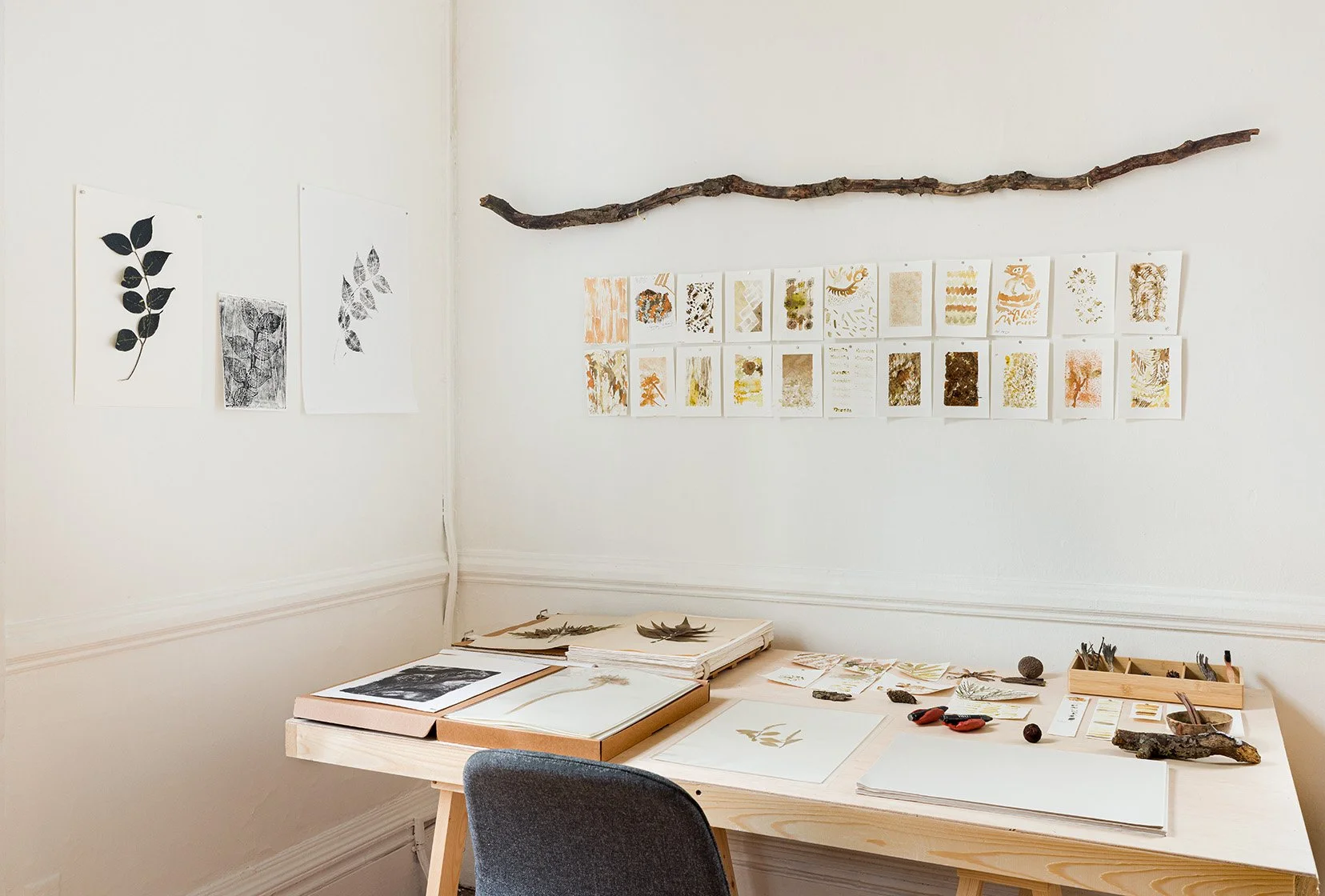
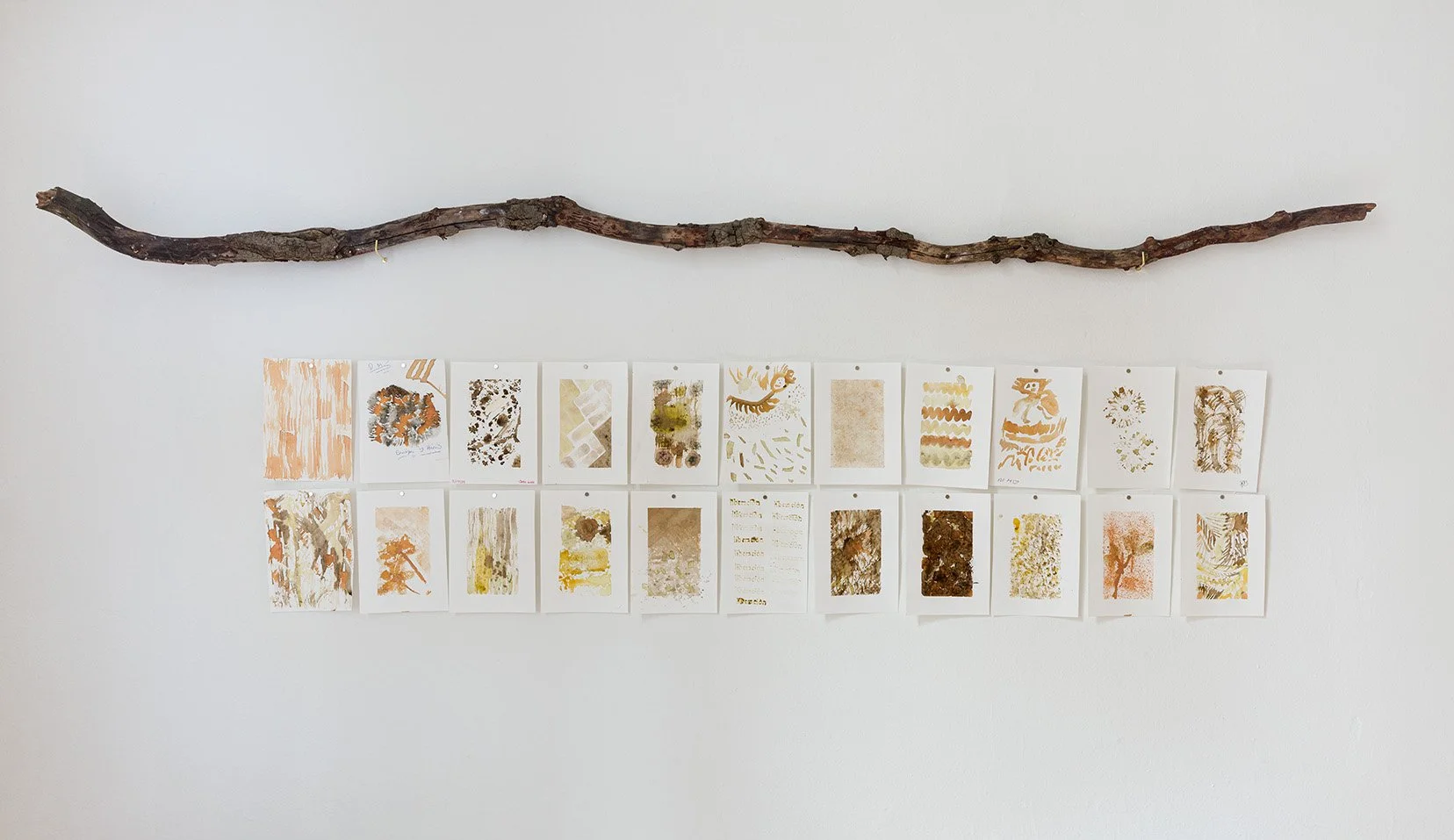
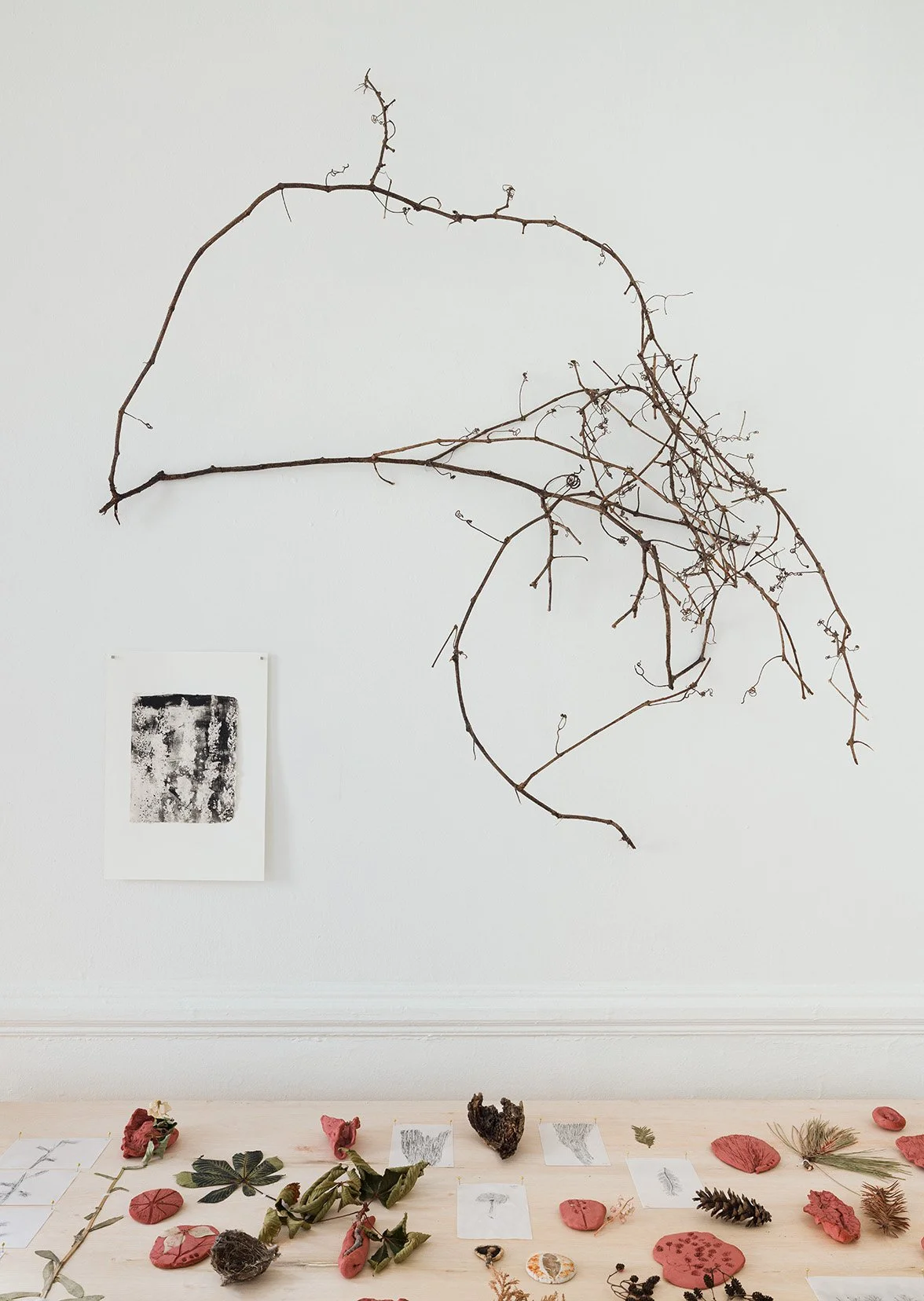
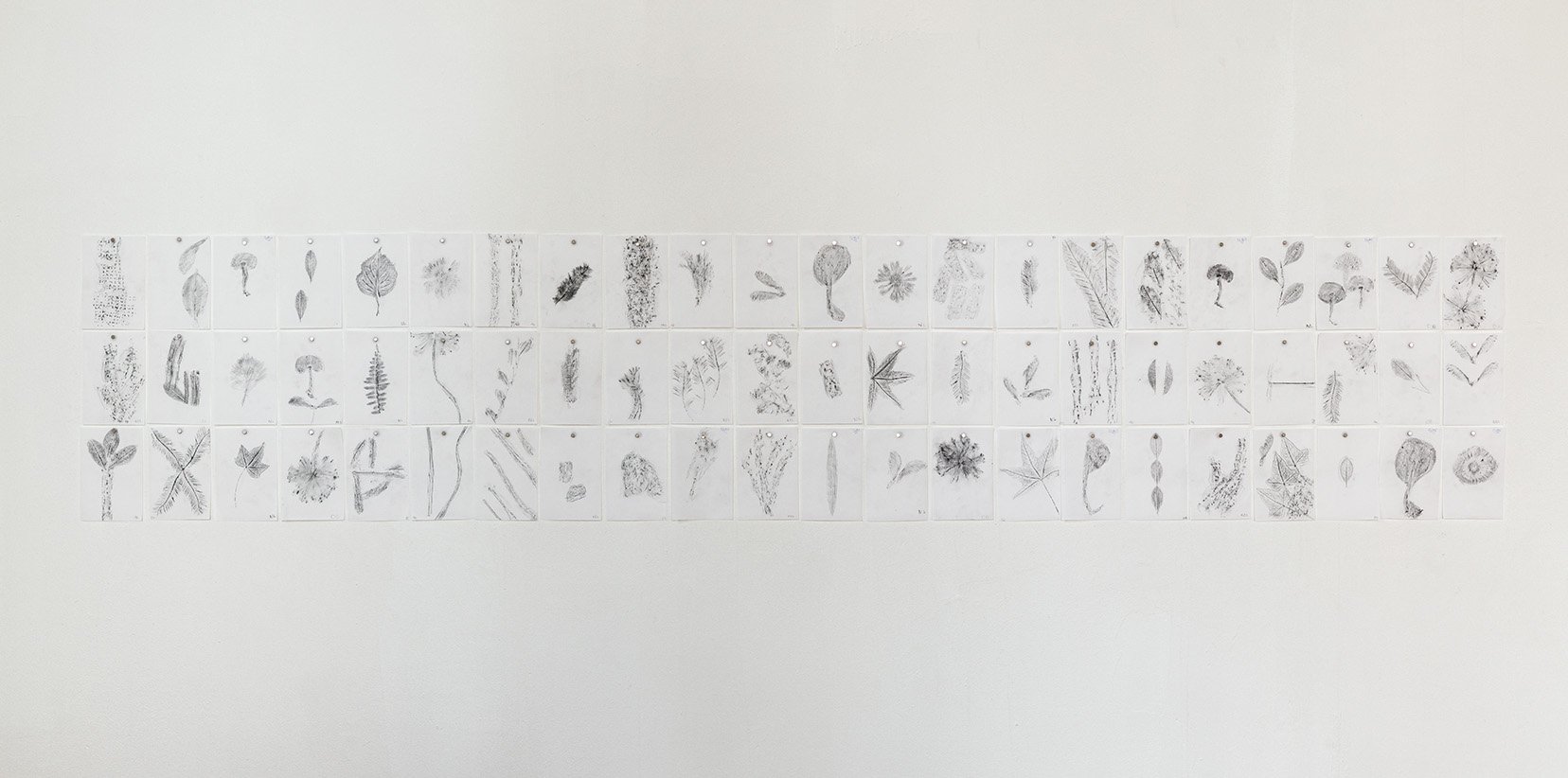
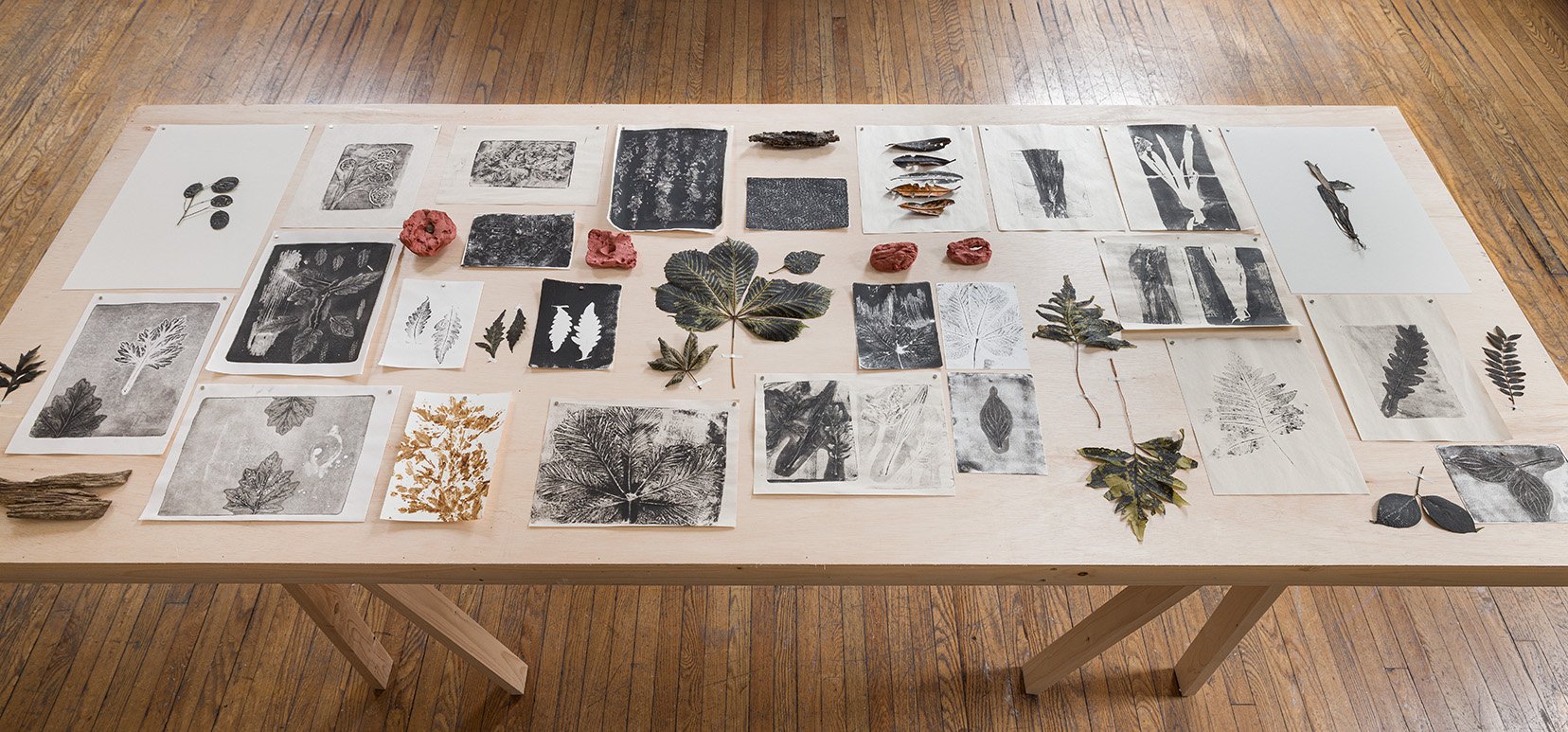
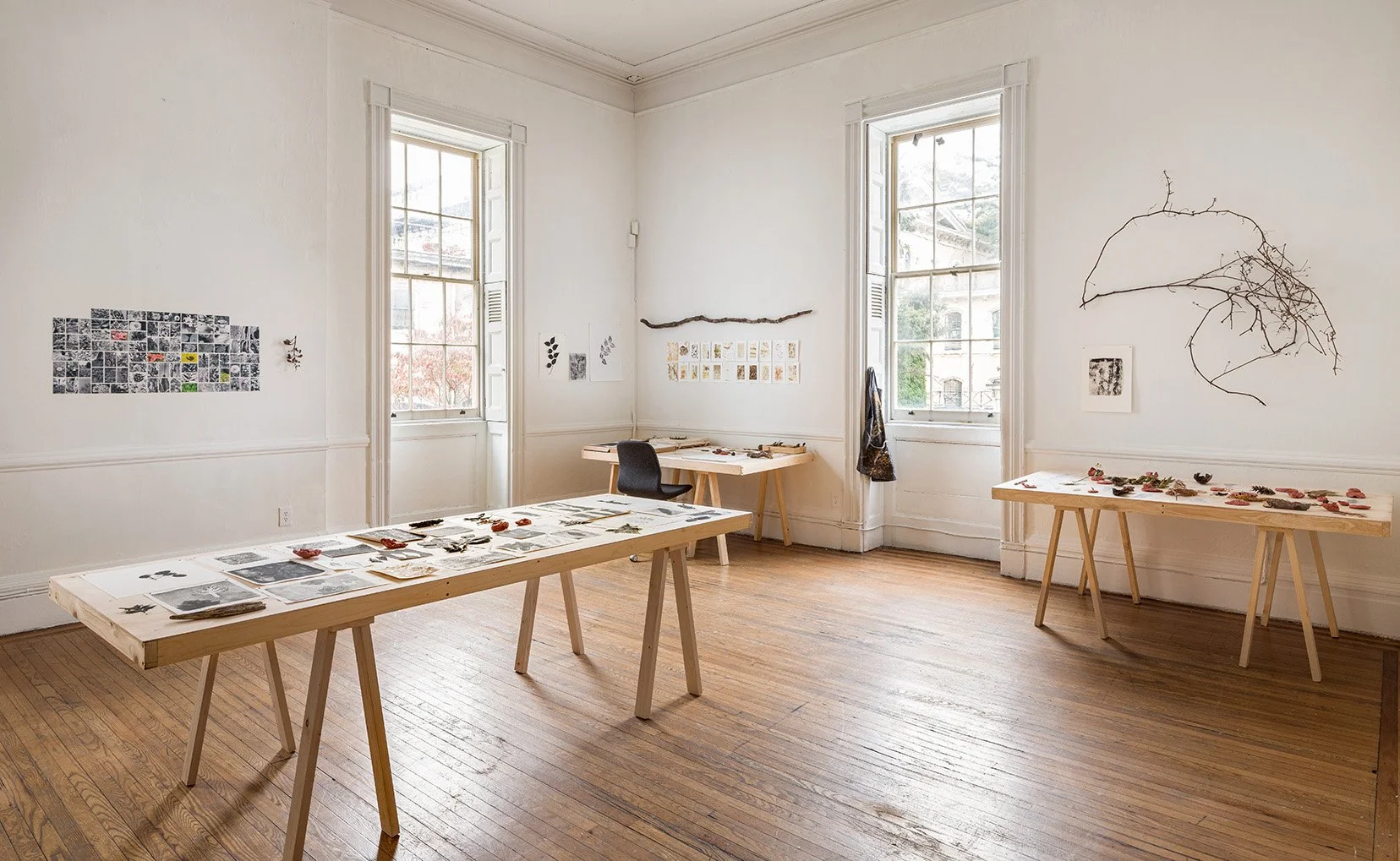
The objects presented in this room are the result of an invitation: to approach the garden at Snug Harbor and build a different kind of relationship with the plants and fungi that inhabit this place. This exercise was developed as part of the workshop series "Weaving Ourselves into the Land," facilitated by Tatiana Arocha, Eliana Hernández, Jimena Vega, and the collective Ginger Blonde, between April and June 2025.
Relating to plants in a different way meant breaking the usual distance we tend to keep from the vegetal world—especially in a protected space like a botanical garden—and engaging with them through play, exploration, and creativity. To reconnect with plants and understand their many languages, we also had to learn to look at them differently, approaching them with all our senses. These workshops provided us with the opportunity to shed our assumptions about art and writing, including what is considered beautiful and who can be an artist. We had to allow ourselves to make mistakes—and by giving ourselves the freedom to remain in that space of trial and error, without judgment, something new could emerge. Both participants and facilitators permitted ourselves to play like children again.
The visual archive on display documents a collective exploration of Snug Harbor’s garden through exercises in photography, frottage, monotype, writing, and drawing using pigments made from mambe. Beyond the outcomes themselves, the workshops were, above all, a space to comadrear—to gather, share stories, and build connections among the thirteen women who took part: Elizabeth Castañeda, Aluna Martínez, Catalina León, María Hilda Díaz, Nancy López, Alejandra García, Jimena Vega, Jessica Simbana, Lourdes Zambrano, Zaraith Hernández, Digna María Santos, Diana Bermúdez, and Severina Gregorio. They also gave us an opportunity to reconnect with the knowledge passed down by our grandparents—and especially our grandmothers—about, and through, the plants. More than companions, plants, as activators of memory, have the power to transport us: to take us back to childhood, to the place that was once our home, and to reconnect us—through memory—with the people we love.
The workshops created a space of care among women, away from our daily responsibilities, where our stories could be heard and resonate with those of other compañeras. We are living in a time when the migrant community—especially women—need more than ever to feel safe and accompanied. These exercises also stand as testimony to what we can achieve when we are fully present and when we move beyond being mere observers to become active members of the community we can build with plants. In cultivating intimacy with them, we also begin to encounter our own inner life.
Spaces like these remind us that women can do anything we set our minds to—and that it’s also fun to dare to try new things. Alongside the plants, we remember where we come from, and we realize that we can find and recognize ourselves in this country that we, too, belong to. We have put down roots here and in this garden.
– Tatiana Arocha y Eliana Hernández Pachón